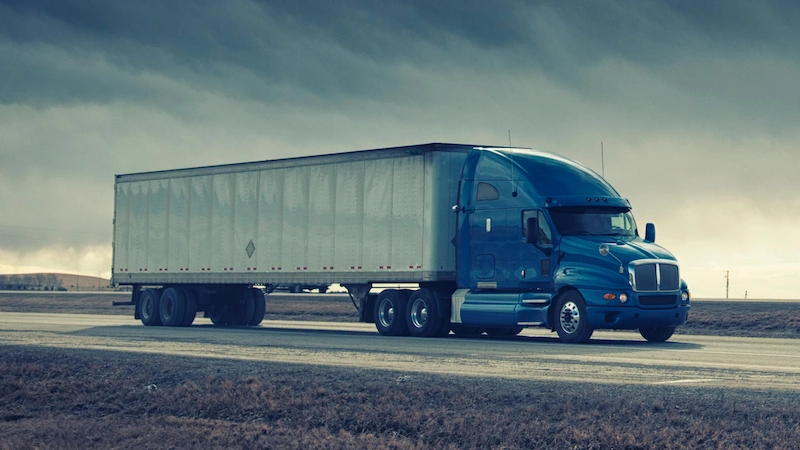
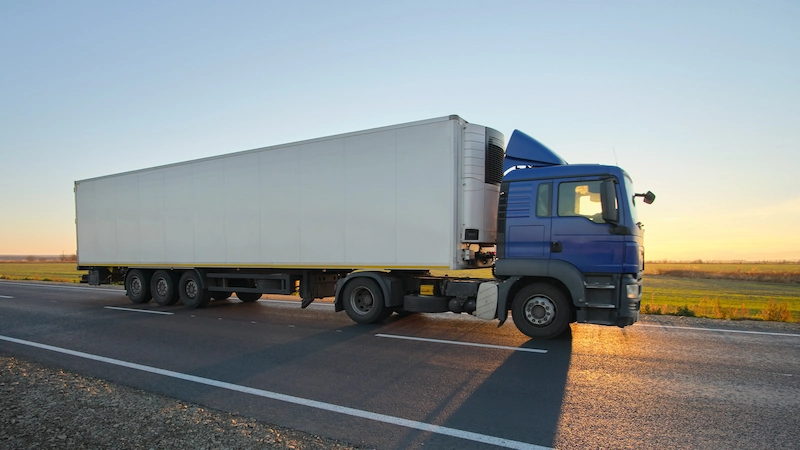
A standard semi-truck pulling a common 53-foot semi-trailer typically has five axles. One steer axle, two drive axles, and two trailer axles. Together, these axles commonly support 18 wheel positions, which is where the term “18-wheeler” comes from.
The steer axle sits at the front of the tractor and supports the front wheel ends. Behind it are two drive axles, which transfer power from the drivetrain to the wheels and move the truck. The semi-trailer typically adds another two axles at the rear to support the trailer and its load.
Not every semi-truck uses the same setup. Depending on the trailer, cargo, and application, a truck-and-trailer combination may have three, four, six, or more axles. Lift axles, spread-axle trailers, and heavy-haul configurations can all change the total. In this guide, we explain how many axles a semi-truck has, where each axle is located, what it does, and how axle weight limits work in Ontario and across Canada.
Why Does a Semi Truck Usually Have 5 Axles?
The five-axle setup serves a practical purpose. It evenly distributes heavy cargo weight, improves stability and braking, and reduces stress on individual axles and the road surface. It also helps the truck operate within applicable weight regulations.
Semi Truck Axle Configuration Explained
The tractor usually has three axles. The steer axle sits at the front. It controls direction and carries the truck’s front weight. The steer axle sits at the front. It controls direction and carries the tractor to a maximum of 7,700 kg, subject to tire, axle, and manufacturer ratings. r’s front weight. Under many Ontario SPIF tractor-trailer configurations, the front axle is limited
The drive axles sit behind the cab. Most highway tractors use two drive axles together, called a tandem drive group. These axles receive torque through the drivetrain and turn the rear wheels. Some short-haul day cabs use only one drive axle. That setup creates a single-axle semi truck with two total axles: one steer axle and one drive axle. Fleets use these trucks for lighter regional work where they do not need the weight capacity of a tandem drive tractor.
Axles on the Trailer
A standard dry van or reefer trailer usually has a tandem axle group at the rear. That means two trailer axles sit close together and share the load. Trailer axle spacing changes how the trailer handles weight.
A standard tandem group often has close axle spacing, roughly around 5 feet. A spread-axle trailer places the trailer axles farther apart, often near 10 feet. That spacing can allow higher legal weight in some jurisdictions because the load spreads over a longer section of road and bridge deck.
What Is the Ontario Bridge Formula?
The Ontario Bridge Formula (OBF) relates allowable vehicle weight to axle spacing. In simple terms, spreading weight over a longer distance reduces the concentrated load placed on bridges.
The metric formula is:
W = 10 + 3(BM) − 0.0325 (BM²)
Where:
- W = allowable weight in tonnes
- BM = equivalent base length in meters
Heavy trailers may use more than two axles. Lowboys, floats, and other heavy-haul trailers may use a tridem group with three axles or a quad group with four axles. Each of those axles runs its own spindles, hubs, bearings, and seals, which is why axle count also drives your maintenance load.

Semi Truck Axle Count Examples and Quick Reference
| Vehicle Description | Axle Formula | Total Axles |
|---|---|---|
| Bobtail single-axle tractor | 1 steering + 1 drive | 2 |
| Bobtail tandem tractor | 1 steering + 2 drive | 3 |
| Tandem tractor + single-axle trailer | 1 + 2 + 1 | 4 |
| Standard 18-wheeler | 1 + 2 + 2 | 5 |
| Heavy-haul tractor + tri-axle lowboy | 1 + 2 + 3 | 6 |
| Specialized heavy-haul combination | Multiple axle groups | 7+ |
How Many Axles Does a Semi Truck Tractor Have Without a Trailer?
A semi truck tractor without a trailer usually has 2 or 3 axles. A day cab or sleeper tractor commonly has 1 front steering axle and 2 rear drive axles. This configuration is called a tandem-axle tractor.
| Tractor Configuration | Axle Count | Common Use |
|---|---|---|
| Single-axle tractor | 2 axles | Light regional freight |
| Tandem-axle tractor | 3 axles | Standard long-haul freight |
| Heavy-haul tractor | 4 or more axles | Oversize and overweight loads |
A tractor without a trailer is often called bobtailing. A bobtail semi usually has fewer axles on the road than a full tractor-trailer combination.
How Many Axles Does a Semi-Trailer Have?
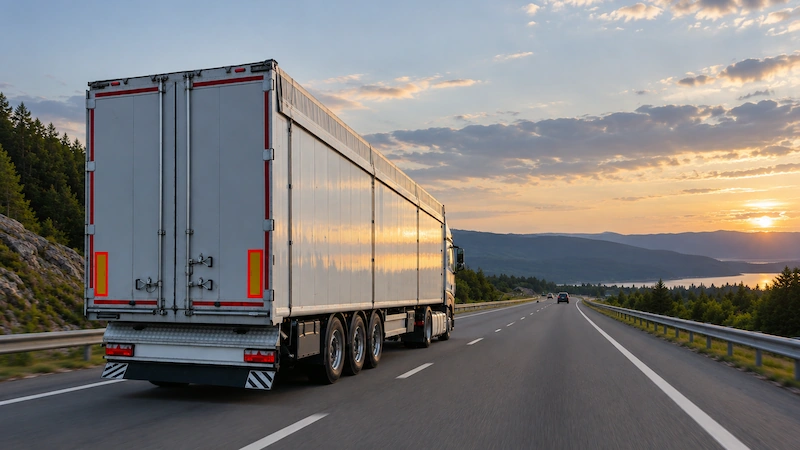
A standard semi-trailer usually has 2 axles near the rear. These two trailer axles form a tandem axle group. The front of a semi-trailer does not have a front axle because it rests on the tractor’s fifth wheel.
Some trailers use different axle counts:
| Trailer Type | Typical Axle Count | Primary Use |
|---|---|---|
| Dry van trailer | 2 axles | General freight |
| Reefer trailer | 2 axles | Refrigerated freight |
| Flatbed trailer | 2 axles | Steel, lumber, machinery |
| Tanker trailer | 2 or 3 axles | Liquids and dry bulk |
| Lowboy trailer | 2 to 4+ axles | Heavy equipment |
| Extendable trailer | 3+ axles | Long oversized freight |
A trailer’s axle count depends on cargo density, route rules, bridge laws, and equipment design.
What Is the Difference Between Axles and Wheels on a Semi Truck?
An axle supports wheels. A wheel carries the tire. A standard semi truck has 5 axles and often 18 wheels because rear axles usually carry dual wheels on both sides.
Example:
- The steering axle has 2 wheels.
- Each drive axle often has 4 wheels.
- Each trailer axle often has 4 wheels.
- Five total axles can support 18 total wheels.
This difference matters because toll agencies, weigh stations, maintenance teams, and insurance documents may count axles instead of wheels.
How Many Axles Does an 18-Wheeler Have?
An 18-wheeler usually has 5 axles. The name “18-wheeler” describes the wheel count, not the axle count. A common 18-wheeler has 2 front wheels, 8 drive wheels, and 8 trailer wheels.
| Position | Wheels | Axles |
|---|---|---|
| Front steering axle | 2 wheels | 1 axle |
| Tandem drive axles | 8 wheels | 2 axles |
| Tandem trailer axles | 8 wheels | 2 axles |
| Total | 18 wheels | 5 axles |
The wheel count changes when a trailer uses super-single tires, lift axles, or specialized axle groups. The axle count still controls many legal and operational limits.
Can a Semi Truck Have Fewer Than 5 Axles?
Yes, a semi truck can have fewer than 5 axles. Smaller tractor-trailer combinations may use 3 or 4 axles, especially for lighter freight, local delivery, or short regional routes.
| Combination Type | Typical Axle Count | Example |
|---|---|---|
| Single-axle tractor + single-axle trailer | 3 axles | Light local freight |
| Tandem tractor + single-axle trailer | 4 axles | Medium regional freight |
| Tandem tractor + tandem trailer | 5 axles | Standard highway freight |
| Heavy-haul tractor + multi-axle trailer | 6+ axles | Oversize loads |
A lower axle count reduces vehicle weight and maintenance cost. It also reduces legal payload capacity.
Can a Semi Truck Have More Than 5 Axles?
Yes, a semi truck can have more than 5 axles. Heavy-haul semi trucks, lowboy trailers, logging trucks, fuel tankers, and oversized-load combinations may use 6, 7, 8, or more axles.
More axles help a truck carry heavier loads while reducing weight per axle. Provincial permits often require extra axles for overweight freight.
Common high-axle setups: six axles for heavy construction equipment, seven axles for lowboy and multi-axle trailer work, eight or more for wind turbine parts, transformers, cranes, and bridge beams, and steerable axles for tight turns with oversized freight.
How Can You Count Axles on a Semi Truck?
You can count semi truck axles by counting each visible axle line from front to rear. Count the front steering axle, each drive axle under the tractor, and each trailer axle under the trailer.
Use this simple method:
- Start at the front wheels. The front steering axle counts as 1.
- Count the tractor’s rear axle lines. A tandem drive set counts as 2.
- Count the trailer axle lines. A tandem trailer set counts as 2.
- Add lift axles. Some systems still count raised lift axles.
- Separate wheels from axles. Dual tires on one axle still count as one axle.
A standard tractor-trailer gives you this count: 1 + 2 + 2 = 5 axles.
What Are the Axles on a Semi Truck Called?
A semi truck uses steering axles, drive axles, and trailer axles. Each axle type performs a different mechanical job.
| Axle Name | Location | What It Does |
|---|---|---|
| Steering axle | Front of tractor | Steers the semi truck |
| Drive axles | Rear of tractor | Transfers torque from the engine |
| Trailer axles | Rear of trailer | Carries freight weight |
| Lift axle | Optional on some trucks | Adds support when loads are heavy |
| Pusher axle | Ahead of drive axles | Increases legal load capacity |
| Tag axle | Behind drive axles | Supports added rear weight |
A standard semi truck does not always use lift axles, pusher axles, or tag axles. Heavy-haul trucks, dump trucks, lowboys, and specialized trailers use them more often.
The Types of Semi Truck Axles and What Each One Does
Semi-truck axle names come mainly from their position and job. Some axles steer. Some drive. Some only carry weight.
Steer Axle, Also Called the Front Axle
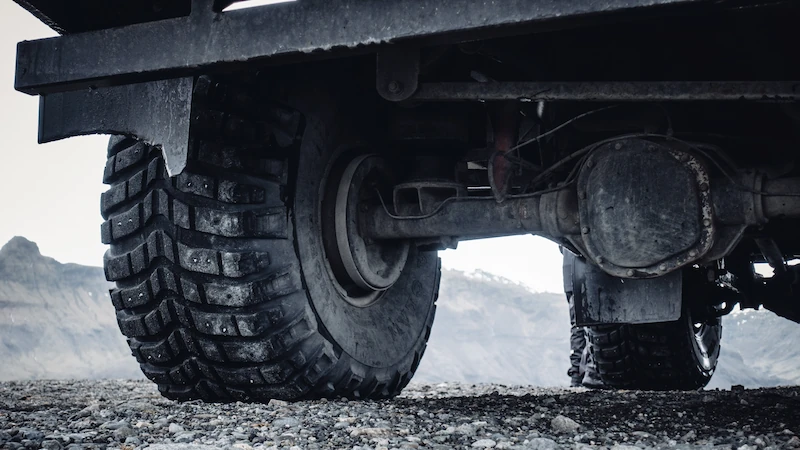
The steer axle sits under the front of the tractor. It turns the truck and carries the front-end load. This axle also contains parts that matter during repair: the spindle, hub, wheel bearings, king pin, brake parts, and steering knuckle. Because the steer axle controls direction, wear in this area can cause loose steering, tire wear, vibration, or poor handling.
Drive Axle
The drive axle moves the truck. It receives torque through the transmission, driveshaft, and differential, then sends that force to the wheels. Most highway tractors use two drive axles in a tandem group. The differential controls how torque reaches the drive wheels, and some trucks use a differential locker to improve traction when needed.
Heavy trucks usually use full-floating axle designs, where the axle shaft drives the wheel but does not carry the full vehicle weight alone. That design matters during repair, because a full-floating hub can be serviced without pulling the axle shaft out of the housing. Axle ratio also matters. A higher numerical axle ratio improves pulling power, while a lower numerical ratio can improve fuel economy at highway speeds.
Tag and Pusher Axles
A tag axle and a pusher axle both add load capacity, but they sit in different places. A pusher axle sits ahead of the drive axle group. A tag axle sits behind the drive axle group. Both are non-powered axles, which means they carry weight but do not drive the truck.
These axles help spread weight across more contact points. Dump trucks, mixers, straight trucks, and heavy vocational units often use them.
Lift Axle
A lift axle is a tag or pusher axle that can raise and lower. Air systems usually control it. The driver raises the lift axle when the truck runs empty or lightly loaded. This reduces tire scrub, tire wear, and rolling resistance. Under load, the lift axle lowers to help spread weight and meet legal axle weight limits.
Dead Axle
A dead axle carries weight but does not receive engine power. Trailer axles are dead axles. Tag axles are also dead axles. This term can confuse new drivers because a “dead” axle still does important work. It supports the load, carries the hub and bearings, and helps the truck meet legal weight distribution rules.
Tandem, Tridem, and Quad Configurations
A tandem axle group has two axles. A tridem group has three. A quad group has four. These groups help heavy trucks carry more legal weight by spreading the load. A standard tractor-trailer usually has two tandem groups: one tandem drive group on the tractor and one tandem trailer group at the rear. Heavy-haul setups use tridem or quad groups to reach 6, 7, 8, or 9 axles.
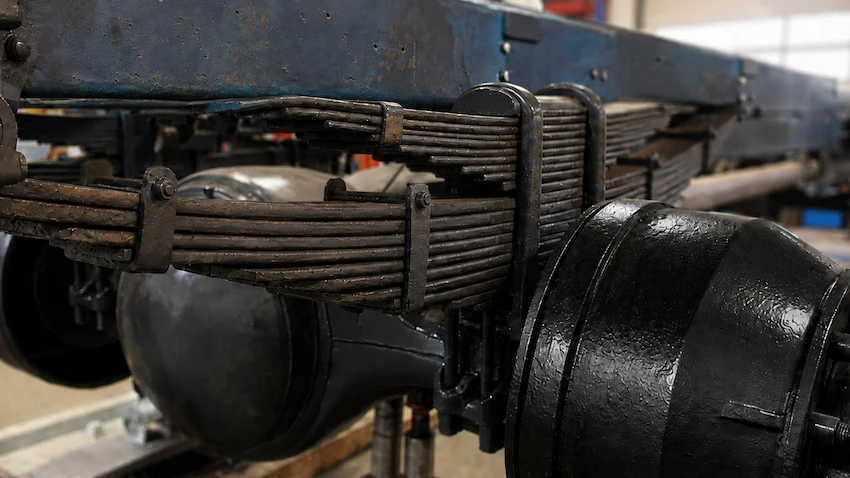
Suspension also affects how these axles carry weight. Common systems include air ride, leaf spring, and walking beam suspension. For a closer look at air systems, see how air ride suspension works on a truck.
Ontario Axle Weight Limits
Canada handles vehicle weights and dimensions through provincial and territorial rules, so Ontario, Alberta, British Columbia, and Quebec do not all use one identical chart. According to Ontario Regulation 413/05 (Vehicle Weights and Dimensions), legal weight allowances are determined by tire setup and axle spacing. These are the baseline figures that apply in Ontario:
| Axle or Configuration | Common Ontario Maximum |
|---|---|
| Front axle on many SPIF tractor-trailer configurations | 7,700 kg |
| Single axle with dual tires | 10,000 kg |
| Tandem axle group | Up to 19,100 kg, depending on axle spread |
| Tridem axle group | Varies by configuration and spread |
| Qualifying B-train combination | Up to 63,500 kg GVW |
Please note: Actual legal weight depends on the vehicle configuration, axle spacing, tire setup, component ratings, and applicable Ontario weight tables.
SPIF, Ontario’s Axle Configuration Rules
Between 2000 and 2011, Ontario phased in a four-stage overhaul of vehicle weight and dimension regulations under HTA Regulation 413/05. Vehicles meeting the new standard are designated Safe, Productive and Infrastructure-Friendly, or SPIF.
SPIF vehicles are designed to operate more safely, take up less road space, and reduce wear on pavement and bridges while maintaining productivity.
Reduced Load Periods and Spring Thaw
Ontario reduces allowable truck weights on some roads during the spring thaw to protect roads from damage. These restrictions usually apply in March and April in Southern Ontario and can continue into May in Northern Ontario.
On designated reduced-load roads, the limit is generally 5,000 kg per axle. Most 400-series highways are exempt, but restrictions vary by road and location. Check Ontario 511 for current restrictions before planning your route.
Two Ontario Thresholds Worth Knowing
- Ontario generally requires a CVOR for trucks with a registered gross weight or actual weight over 4,500 kg, subject to exemptions. Commercial vehicle inspection requirements also apply to many trucks and trailers above the 4,500 kg threshold.
- Any heavy truck with a GVWR of 11,794 kg or more must run an electronic speed limiter capped at 105 km/h on Ontario highways.
Running into the United States
If you cross the border, different federal and state limits apply. These are the standard U.S. federal Interstate figures:
| Weight Category | Common Federal Limit |
|---|---|
| Gross vehicle weight | 80,000 lb (36,287 kg) |
| Single axle | 20,000 lb (9,072 kg) |
| Tandem axle group | 34,000 lb (15,422 kg) |
These numbers do not replace state-specific limits, equipment ratings, tire ratings, or permit rules. A truck can be under 80,000 lb and still be illegal if one axle group carries too much weight. Axle spacing and configurations are strictly governed across the border by the FHWA Federal Bridge Formula Weights Guide, which controls how much weight a group of axles can carry based on the number of axles and the distance between them.
Does Axle Count Affect Braking and Safety?
Yes, axle count affects braking and safety because each axle position supports tires, suspension components, and brake assemblies. More axles can improve load distribution, but the full braking system must match the vehicle’s weight rating.
Axle count alone does not make a truck safe. Load placement, maintenance, driver control, and road conditions also affect safety.
Does Axle Count Affect Semi Truck Tolls?
Yes, toll rates can change based on a truck’s configuration. On Ontario’s 407 ETR, commercial vehicles are classified as either Heavy Single Unit or Heavy Multiple Unit, depending on whether a trailer is being pulled.
In general, larger truck and trailer combinations pay higher toll rates than smaller commercial vehicles. A 5-axle semi truck will pay a significantly higher per-kilometer rate than a 2-axle box truck, and heavy-haul configurations (like 6-axle to 8-axle setups) incur the highest base toll classes on the highway system.
Why Do Some Semi Trucks Have Lift Axles?
Some semi trucks have lift axles to support heavy loads when needed and reduce tire wear when unloaded. A lift axle can raise off the road or lower onto the road.
A lift axle spreads weight across more axle lines, reduces overload risk on heavy hauls, helps with permit compliance, and cuts tire wear when raised during light running. It also changes handling depending on speed, road surface, and load position. Lift axles appear more often on dump trucks, concrete mixers, heavy-haul tractors, and specialized trailers than standard 53-foot dry van combinations.
Why a Bobtail or Day Cab Has Fewer Axles
A bobtail semi is a tractor running without a trailer. Most bobtail tractors have three axles: one steer axle and two drive axles. A day cab can have two or three axles, depending on its job. A single-drive-axle day cab has two total axles and works better for lighter loads, city work, and shorter routes. A tandem-drive day cab has three axles and carries more weight.
Conclusion
A semi truck has 3 axles on its own and 5 axles with a standard trailer. That count affects weight limits, toll class, permits, and repair planning. Every one of those axles runs on spindles, hubs, bearings, seals, and brakes, and any one of them can put a unit out of service. We handle axle, spindle, and wheel-end repair on-site across the GTA and southwestern Ontario.

Frequently Asked Questions
No, a semi truck is not always a 5-axle vehicle. Axle count changes with tractor design, trailer type, cargo weight, and provincial permit requirements.
A standard 53-foot semi-trailer usually has 2 rear axles. Some specialized trailers use 3 or more axles for heavier or unusual freight.
Semi trucks use dual tires to spread weight, improve traction, increase load capacity, and add redundancy. Dual tires commonly appear on drive axles and trailer axles.
The most common semi truck axle setup is 1 steering axle, 2 drive axles, and 2 trailer axles. This equals 5 axles total.
An 18-wheeler usually has five axles. The name refers to the number of wheels, not the number of axles. A standard setup has three axles on the tractor and two axles on the trailer, giving five axles total.
The drive axle is the powered rear axle on the tractor. Most highway tractors have two drive axles grouped together as a tandem drive set. These axles receive torque through the drivetrain and move the truck. The front axle steers, and the trailer axles roll freely.
Ontario allows truck and trailer combinations with more than five axles. Depending on the approved vehicle configuration, semi-trailers may use tandem, tridem, quadruple, or other multi-axle arrangements. Qualifying B-train combinations can operate at gross vehicle weights of up to 63,500 kg, subject to Ontario’s vehicle weight and dimension requirements.