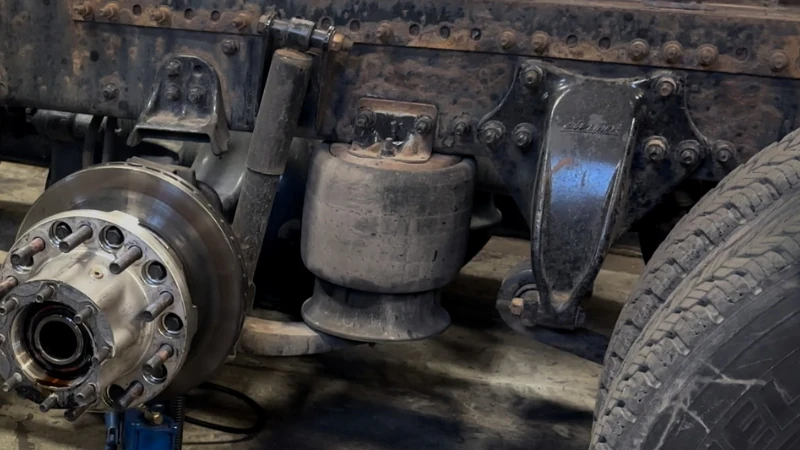
Air Ride Suspension is a form of vehicle suspension that uses rubber bags inflated with air known as air springs rather than steel leaf springs or coil springs. It uses an onboard air compressor to provide the required load support, maintain the level position of the vehicle, and provide a comfortable ride.
Air suspension is mostly common on heavy duty commercial freight trucks, semis, trailers, buses, recreational vehicles (RVs), pick-up trucks, 4×4, and luxury vehicles. This article gives a comprehensive overview of air ride suspension, its operations, applications, pros and cons compared to steel spring suspension systems, and some pricing information.
What Does Air Ride Suspension Do?
Air ride suspension controls how high, soft, firm, and level a vehicle sits. It uses air pressure to raise the vehicle, lower the vehicle, level heavy loads, and absorb road impacts. A basic air ride system performs four main jobs.
| Function | What Air Ride Suspension Does |
|---|---|
| Supporting vehicle weight | Uses pressurized air springs instead of only metal springs |
| Adjusting ride height | Raises or lowers the body through air pressure changes |
| Leveling the vehicle | Corrects rear-end sag from cargo, towing, or passengers |
| Improving ride comfort | Absorbs bumps through compressible air inside rubber bags |
Air ride suspension changes the relationship between the road, tires, chassis, and body. This makes the system extremely valuable for comfort, stance, towing, and load control.
How Does Air Ride Suspension Work?
Air ride suspension works through a continuous cycle. Sensors measure the vehicle height, the control module compares that reading to the target height, and the compressor or valves adjust air pressure to keep the vehicle level. The system’s main parts, including the air springs, compressor, sensors, and valves, work together to respond to load changes in seconds.
What are the Main Components
An air ride suspension system combines mechanical and electronic parts working together. Each part has a specific role. some create and store pressure, others measure and adjust it, and some protect the system from damage. Understanding each part helps you spot any wears early and keep the system reliable.
An air ride suspension system uses these core parts:
| Component | Function |
|---|---|
| Air springs (air bags) | Rubber bellows that fill with air and carry the vehicle’s weight |
| Air compressor | The pump that builds system pressure |
| Air storage tank | A reservoir that stores compressed air |
| Ride height sensors | Sensors that read how high the vehicle sits. |
| Valve block and solenoids | Air-control parts that send pressure to the correct air spring or release it. |
| Control module (ECU) | The electronic control unit that reads sensor data and commands the valves. |
| Air lines and fittings | Tubes and connectors that move air through the system. |
| Air dryer | A moisture-control part that helps remove water before it causes corrosion or freezing. |
| Shock absorber | Controls bouncing and body motion |
How It Adjusts in Real Time
The adjustment chain starts with the ride height sensors. They read the height at each corner or axle group. The control module decides what needs correction. The valve manifold opens the correct air path. The compressor supplies pressure as needed. The air springs inflate or deflate until the vehicle returns to the target ride height.
On trucks and trailers, a mechanical height control valve can also manage airflow. It adds air when the suspension sits too low and releases air when the suspension sits too high. The payoff is a level vehicle under changing weight. A trailer can run empty, take on freight, and still hold its designed ride height. A pickup can tow with less sag. The computer-controlled version often goes by Electronically Controlled Air Suspension, or ECAS.
Air Ride on Trucks and Trailers and Everywhere Else
Air ride proves its value the most when it comes to heavy duty jobs. Long-haul trucks and semi-trailers use air ride suspension system to protect freight, reduce shock, improve driver comfort, and keep loads level across axles.
On many trailers, air ride uses a trailing-arm design. The control arm connects the axle to the suspension structure, and the air spring sits over the axle on an axle seat or related mounting point. The height control valve watches ride height and adds or releases air as the load changes. Air ride suspension in trailers also helps distribute weight more evenly across axle groups. It does not replace legal weight checks, but it supports better axle-load balance.

Other vehicles use air ride mostly for comfort, stance, or load support. Aftermarket kits are widespread in pickups and four-wheel drive vehicles for towing, stance tuning and ride height adjustment. Ram 1500 and F-150 owners prefer to install air ride kits for load leveling. Most luxury cars have the air ride suspension installed at the factory with adaptive suspensions.
Air suspension and Magnetic Ride Control are two different systems. Air suspension uses compressed air to adjust the vehicle’s ride height, while Magnetic Ride Control adjusts shock damping to improve ride quality without changing the vehicle’s height.
What Is an Air Spring?
An air spring is a reinforced rubber chamber that holds compressed air. It supports the vehicle like a coil spring, but it changes height and firmness when air pressure changes.
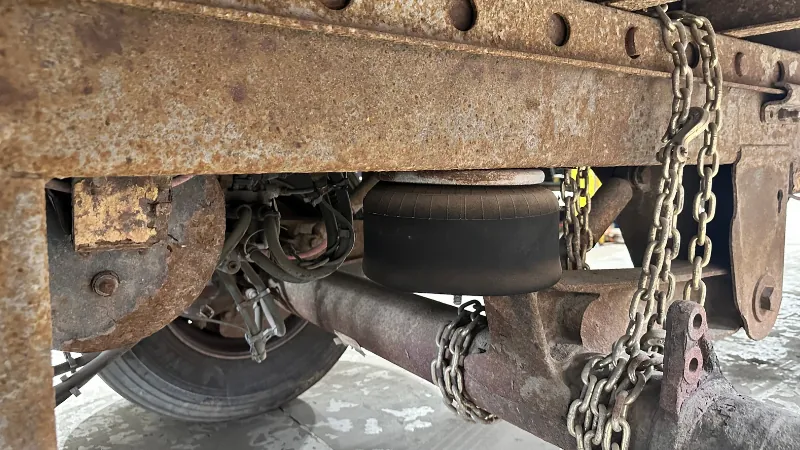
Air springs may appear as:
- Sleeve-style air springs in compact suspension spaces.
- Double-convoluted air bags in trucks and custom builds.
- Air struts in luxury cars and performance vehicles.
- Helper air bags beside leaf springs for towing support.
What Does the Compressor Do?
The compressor creates the air pressure used by the suspension. It pulls air from the atmosphere, compresses it, and sends it into the tank or directly into the air springs.
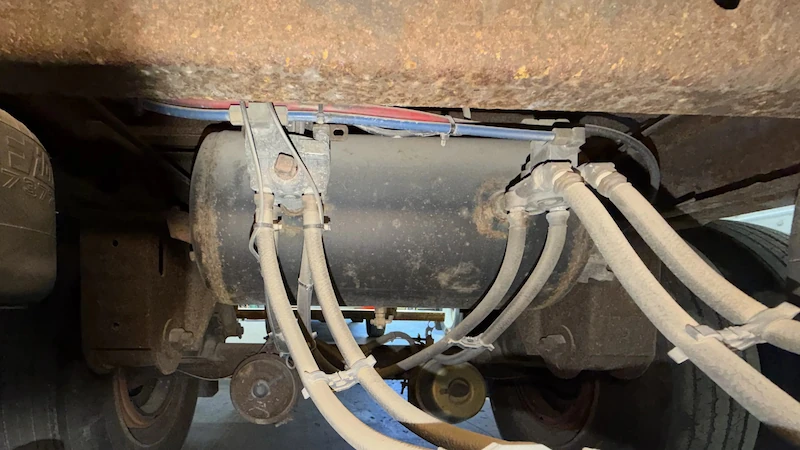
Aftermarket systems often use one or two compressors. OEM systems usually use an integrated compressor, dryer, valve block, and electronic control unit.
Why Does Air Ride Suspension Need Sensors?
Air ride suspension needs sensors to keep the vehicle level. Height sensors measure body position at each axle or wheel. Pressure sensors measure air pressure inside the system.
Sensors help the system adjust for:
- Passenger weight
- Cargo weight
- Trailer tongue weight
- Road speed
- Drive mode
- Parking height
- Off-road clearance
Air Ride vs. Leaf Springs vs. Coil Springs
Air springs, leaf springs, and coil springs all support the vehicle, but each one suits a different job. When comparing air suspension and leaf springs, air ride wins on comfort and load control. Leaf springs and coil springs win on simplicity and cost.
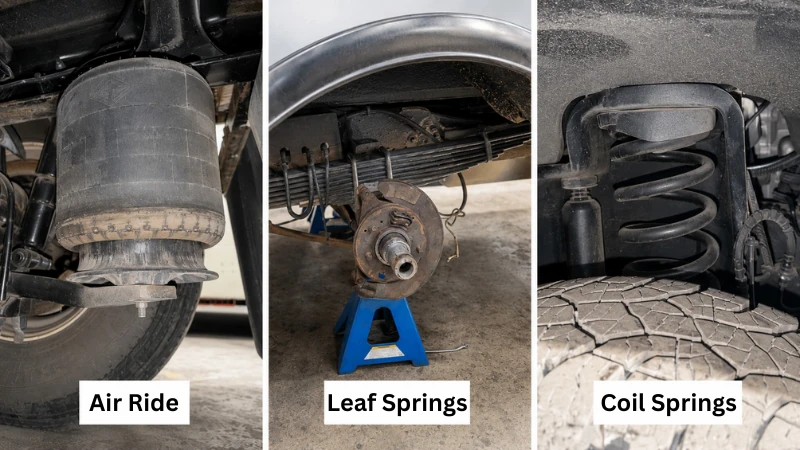
Leaf springs still make sense for heavy hauling because they are cheap, tough, and easy to repair. They can also help locate the axle, though hard torque can create axle wrap. Coil springs ride better than leaf springs in many light vehicles, but they do not self-level like air springs.
| Category | Air Springs | Coil Springs | Leaf Springs |
|---|---|---|---|
| Ride comfort | Best comfort because air pressure can change with load | Good comfort, especially in independent suspension | Firmest ride, especially when unloaded |
| Load leveling and adjustability | Excellent self-leveling and height control | Limited without helper parts | Strong load support, but little height adjustment |
| Durability and simplicity | More parts and more failure points | Simple and durable | Simplest and toughest for heavy work |
| Upfront cost | Highest | Middle | Lowest |
| Maintenance | Bags, compressor, valves, lines, dryer, and sensors need checks | Usually lower | Usually lowest |
| Best for | Comfort, varied loads, freight protection, adjustable ride height | Ride quality in cars and light trucks | Heavy hauling and towing on a budget |

Is Air Ride Suspension the Same as Air Suspension?
Air ride suspension and air suspension describe the same system. “Air ride” is more common in the custom truck and aftermarket industry, while manufacturers, engineers, and service manuals usually use “air suspension.”
The terms have small usage differences:
| Term | Common Use | Meaning |
|---|---|---|
| Air ride suspension | Custom cars, trucks, aftermarket kits | Adjustable pneumatic suspension |
| Air suspension | OEM vehicles, engineering, service manuals | Factory or technical pneumatic suspension |
| Air bag suspension | Towing, trucks, helper kits | Air springs used for support or leveling |
| Pneumatic suspension | Engineering language | Suspension using compressed gas |
What Vehicles Use Air Ride Suspension?
Luxury vehicles, heavy trucks, towing vehicles, and custom cars use air ride suspension. Each vehicle type uses the system for a different reason.
| Vehicle Type | Main Reason for Air Ride Suspension |
|---|---|
| Luxury sedans | Improves ride comfort and cabin isolation |
| SUVs | Adds load leveling and adjustable ground clearance |
| Pickup trucks | Supports towing and payload balance |
| Semi-trucks | Improves load stability and driver comfort |
| Buses | Lowers entry height and smooths passenger ride |
| RVs | Levels heavy bodies and improves long-distance comfort |
| Custom cars | Creates adjustable stance and show-car height control |
| Off-road vehicles | Adds temporary clearance over rough terrain |
A luxury SUV may raise itself for trail clearance and lower itself at highway speeds. A pickup truck may use rear helper bags to reduce squat while towing.
What Are the Types of Air Ride Suspension?
Air ride suspension has four common types. factory air suspension, aftermarket full air ride, helper air bags, and semi-active air suspension. Each type serves a different use case.
| Type | Description | Best Use |
|---|---|---|
| Factory air suspension | OEM-designed complete system | Comfort, load leveling, adaptive ride height |
| Aftermarket full air ride | Custom kit replacing springs | Stance, adjustability, show cars |
| Helper air bags | Air bags added to leaf springs | Towing, hauling, rear sag correction |
| Semi-active air suspension | Air springs with adaptive dampers | Comfort and handling balance |
What Is Factory Air Suspension?
Factory air suspension is an OEM system designed into the vehicle platform. It uses calibrated sensors, software, air springs, and dampers to maintain comfort and stability. Factory systems often include drive modes such as Comfort, Sport, Off-Road, Access, and Load Leveling.
What Is Aftermarket Air Ride?
Aftermarket air ride is a custom system installed after vehicle production. It allows adjustable ride height, lowered stance, and personalized suspension control.
Aftermarket kits may use manual switches, pressure-based controls, or height-based electronic management.
What Are Helper Air Bags?
Helper air bags support existing rear suspension. They do not always replace leaf springs or coil springs. They add support when cargo or trailer weight pushes the rear of the vehicle downward.
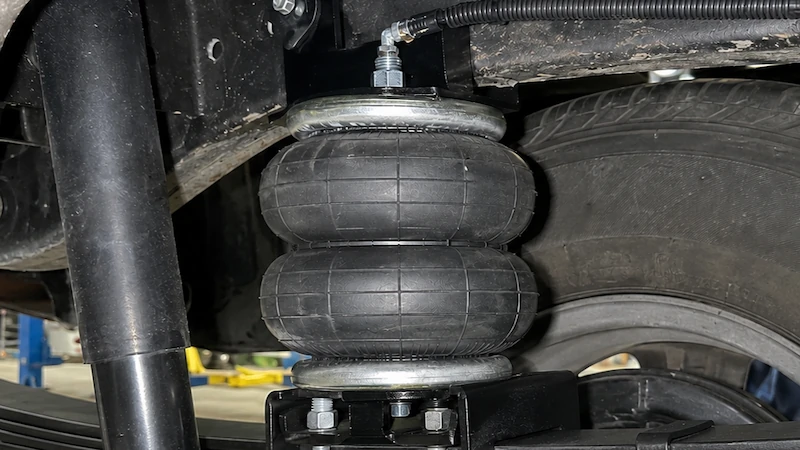
Helper bags help reduce:
- Rear-end squat
- Headlight aim problems
- Trailer instability
- Suspension bottoming
- Uneven tire loading
Pros and Cons of Air Ride Suspension
Air ride provides greater comfort because the air spring can absorb shocks from the roads, so the driver will not experience much fatigue on long journeys. Air suspension can change the ride height for loading, hauling, or stance purposes. The automatic leveling system will make sure that the truck and trailer remain balanced depending on the loading conditions.
The downside of air ride suspension is its high cost and maintenance requirements. Additional parts like the compressor, valves, lines, fittings, sensors, and air springs, make its maintenance cost expensive when compared to a normal steel spring system. Extreme cold weather will also create another problem since moisture can freeze within the air lines, tanks, valves, and fittings.
A steel spring can crack or sag and still give warning. An air ride failure can sideline the vehicle fast if a bag leaks badly, a compressor stops, or a valve sticks. That is why air ride rewards early inspection.
How Long Does Air Ride Suspension Last?
A cared-for air ride suspension system often lasts about 8 to 10 years. Air bags commonly land in the 80,000 to 100,000 mile range. Compressors and valve manifolds often need replacement around 3 to 5 years, depending on use, leaks, road salt, and maintenance.
Air ride suspension lifespan depends on climate, mileage, road salt, load, installation quality, and component design. Air springs often last many years, but rubber aging and air leaks increase with time.
How Much Does It Cost?
As of 2026, a full air ride kit or retrofit commonly costs between $3,000 and $10,000 installed. The exact price depends on the vehicle, axle layout, kit quality, labor, controls, and region. A single replacement air spring can cost over $1,000 for the part alone on some truck, trailer, and premium vehicle applications.
Treat those numbers as planning ranges, not fixed prices. A simple pickup helper-bag setup costs far less than a full electronic air ride conversion. A commercial truck or trailer repair can also change in price if the height control valve, compressor, fittings, or dryer need service at the same time.
What Are Common Air Ride Suspension Problems?
Air ride suspension problems usually show up as changes in height, ride feel, or compressor behavior. A healthy system should lift smoothly, hold pressure, and keep the vehicle level. When it starts leaking air or losing control, the signs are usually easy to notice.
| Symptom | Likely Cause |
|---|---|
| Vehicle drops overnight | Air spring leak, fitting leak, valve leak |
| One corner sits low | Damaged air bag, blocked line, height sensor issue |
| Compressor runs often | System leak or weak compressor |
| Vehicle will not rise | Failed compressor, relay, fuse, valve block, or control module |
| Ride feels bouncy | Worn shocks or incorrect pressure |
| Ride feels harsh | Excessive pressure or poor damping |
| Warning light appears | Sensor, compressor, valve, or calibration fault |
Air ride suspension in Canada needs extra moisture control. Condensation can collect in the tank and lines. Cold weather can freeze that moisture, block airflow, seize valves, and crack plastic lines or fittings. Road salt and freeze-thaw cycles add stress. A working air dryer, moisture draining, and winter checks matter more here than in mild climates. This is key for air ride suspension in Canada, including Calgary and Ontario winter routes.
Is Air Ride Suspension Good for Daily Driving?
Air ride suspension could be good fit for daily driving if the system uses quality parts, correct calibration, and reliable dampers. Factory air suspension usually suits daily driving better than poorly installed custom air ride.
Daily drivers need:
- Reliable height management
- Proper shock absorber matching
- Protected air lines
- Moisture control
- Safe alignment at drive height
- Correct tire clearance
Is Air Ride Suspension Good for Towing?
Air ride suspension can improve towing stability by leveling the rear of the vehicle under trailer tongue weight. It does not increase the legal tow rating unless the manufacturer states it.
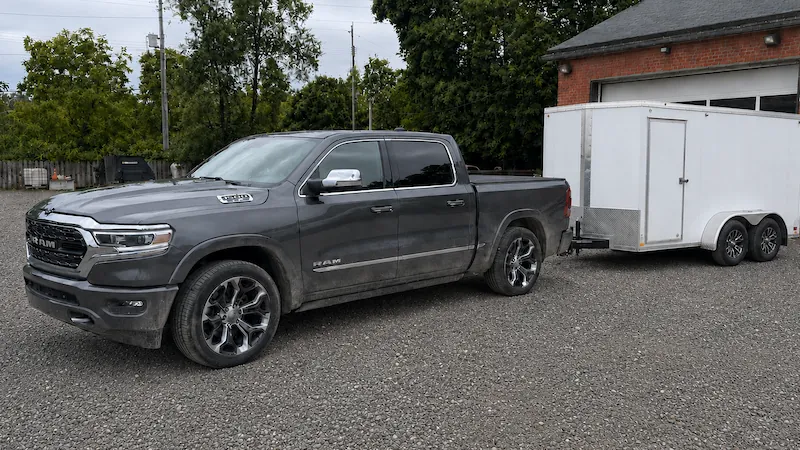
Air helper bags help towing vehicles by:
- Restoring rear ride height
- Reducing suspension bottoming
- Improving headlight aim
- Supporting payload balance
- Maintaining suspension travel
Air bags do not replace proper weight distribution, proper tire inflation, brake capacity, hitch rating, or axle rating.
Does Air Ride Suspension Improve Handling?
Air ride suspension can improve handling when the system controls ride height, spring rate, and damping correctly. It can hurt handling when the vehicle rides too low, lacks travel, or uses mismatAir ride suspension is not automatically better or worse for handling. The result depends on how the system is built and tuned.
A well-set-up air system can make the vehicle feel more planted by keeping the ride height controlled, adjusting stiffness properly, and working with the right shocks. This can help reduce body roll and improve stability, especially in performance-focused setups.
But if the setup is mainly designed for looks, handling can suffer. Riding too low, having poor suspension travel, or using the wrong dampers can make the vehicle feel loose, harsh, or less responsive.
Good handling comes from the full setup working together, including alignment, spring pressure, shock damping, tire grip, suspension travel, and anti-roll bar tuning.
Can You Drive With Failed Air Ride Suspension?
You should not drive far with failed air ride suspension. A collapsed air spring can reduce ground clearance, damage tires, stress suspension arms, and make steering or braking unstable.
Safe action depends on the fault:
| Fault | Driving Risk |
|---|---|
| Small slow leak | May allow careful movement to a repair location |
| Fully collapsed corner | High risk of tire rub and body damage |
| Failed compressor | Vehicle may drop after stored air runs out |
| Broken height sensor | Vehicle may sit unevenly or enter fault mode |
| Air line rupture | Rapid height loss can occur |
A vehicle with a severe air suspension fault should be inspected before normal road use.
How Much Maintenance Does Air Ride Suspension Need?
Air ride suspension needs regular visual checks, leak checks, moisture control, and compressor monitoring. Maintenance prevents small leaks from becoming expensive compressor failures.
Useful maintenance actions include:
- Inspect air bags for cracks and dry rot.
- Check air lines for rubbing and heat damage.
- Listen for frequent compressor cycling.
- Keep fittings clean and tight.
- Replace damaged height sensor links.
- Protect air lines from sharp edges.
- Service the air dryer when the system design requires it.
A compressor that runs too often signals a leak or pressure loss. Fast repair protects the pump.
What Should You Check Before Buying Air Ride Suspension?
You should check system type, component quality, warranty, compressor capacity, air line routing, shock compatibility, and service support before buying air ride suspension.
Use this checklist:
| Buying Factor | Why It Matters |
|---|---|
| Vehicle compatibility | Prevents fitment, clearance, and alignment problems |
| Height-based control | Gives more consistent ride height than pressure-only control |
| Compressor duty cycle | Supports repeated lifting without overheating |
| Tank size | Affects lift speed and stored air capacity |
| Shock quality | Controls bounce and comfort |
| Air line material | Affects durability and leak resistance |
| Installation quality | Determines reliability and safety |
| Warranty support | Reduces ownership risk |
A good air ride system works as a complete suspension package. Cheap parts and poor routing create most avoidable failures.
Is Air Ride Suspension Worth It?
Air ride suspension can be a great choice if you’re looking for better comfort, smoother leveling, and more control on the road. It helps trucks and trailers sit more evenly, carry Air ride suspension makes sense for drivers who want a smoother ride, adjustable height, and better support under changing loads. The added cost is easier to justify when comfort, stance, towing, or load control matters. For vehicles that need the lowest-cost, lowest-maintenance setup, standard coil, or leaf spring suspension may still be the smarter choice.

Frequently Asked Questions
Air ride is better for ride comfort and adjustable load leveling. Leaf springs are better for simple, low-cost durability in heavy hauling. The better choice depends on the vehicle, load, route, and budget.
Air ride suspension does not replace shocks in most vehicles. Air springs support weight. Shocks control bounce, rebound, and body motion. Many air struts combine the air spring and shock in one assembly.
Air ride suspension does not always need an air tank, but most adjustable systems use one. The tank stores compressed air and helps the system raise the vehicle faster.
Air ride suspension can be reliable when it uses quality components and proper installation. Reliability decreases when leaks, moisture, weak compressors, or poorly routed air lines remain uncorrected.
Air suspension usually drops overnight because air escapes through a leaking air spring, fitting, valve block, or air line. A leak test can identify the exact loss point.
Air ride suspension can be expensive to repair because it uses compressors, air bags, sensors, valves, and electronic modules. Repair cost depends on the failed part and vehicle design.