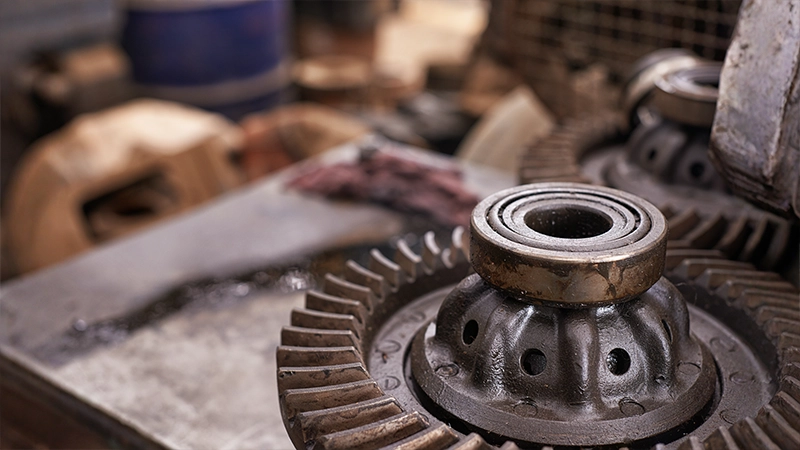
A locking differential, also called a “diff lock” or simply a “locker,” is a drivetrain component that forces both wheels on an axle to spin at the same speed. Unlike an open differential, it does not send power to the wheel with the least resistance. Instead, it physically connects both wheels together so engine power reaches both tires equally. This keeps your truck moving when traction gets bad.
In Ontario, we understand how challenging it can get out there, particularly during Ontario spring thaws, which are no joke. During spring thaws, the frozen road melts into mud puddles, making driving dangerous due to low traction. You can easily find yourself stuck the very next day with the previous day’s clear surface. While the diff lock on your truck is one of your strongest defenses in mud, snow, or gravel, you need to use it properly to prevent an axle from snapping as soon as you return to dry roads.
What Should I Know About a Locked Differential in a Truck?
A locking differential, usually called a “diff lock,” is built into a truck’s axle that forces both wheels on that axle to spin at exactly the same speed. That sounds simple, but the implications for traction are quite real!
An open differential sends equal torque to both wheels, but when one loses grip, that torque gets wasted on the spinning wheel. The grounded wheel gets nothing useful. A diff lock solves this by mechanically linking the two wheels. Both rotate as one, so torque goes to the wheel with traction, and the truck keeps moving.
How Does a Locking Differential Work?
Picture the rear axle as a single, solid steel bar connecting the left and right wheels. If the bar turns, both wheels must turn with it, at the same speed, without exception. That is what an engaged diff lock replicates.
Inside the Axle Housing
In an open differential, two output shafts called half-shafts extend from the differential housing to each wheel. A set of internal gears allows these shafts to rotate independently, which is what gives the open diff its flexibility.
What Changes When You Engage a Differential Lock in a Truck?
- Torque stops chasing the spinning wheel: In an open differential, torque flows to the spinning wheel, the path of least resistance, which is exactly why you get stuck. Once the locker engages, that path is gone, and torque splits 50/50 between both wheels.
- The grounded wheel always gets power: Even if one wheel is hanging over a ditch with nothing under it, the other wheel still receives half the engine’s torque and is forced to turn. That’s what gets the truck moving.
- It’s not the same as traction control: Traction control brakes the spinning wheel to redirect torque. It’s reactive and limited. A diff lock is a direct physical connection; both wheels turn together for as long as the lock is engaged without any braking or delay.
Engaging a Diff Lock Without Breaking It
- Shock loading is the biggest risk: Engaging a locker while a wheel is already spinning forces the collar or pins to join two shafts moving at very different speeds. That impact can shatter the collar, crack a pin, or snap a half-shaft.
- Always slow down or stop first: Let any wheel spin settle before flipping the switch from open diff to a locker. Engaging the locker at speed can cause dramatic damage to your axle shaft, CV joints, or ring and pinion gears.
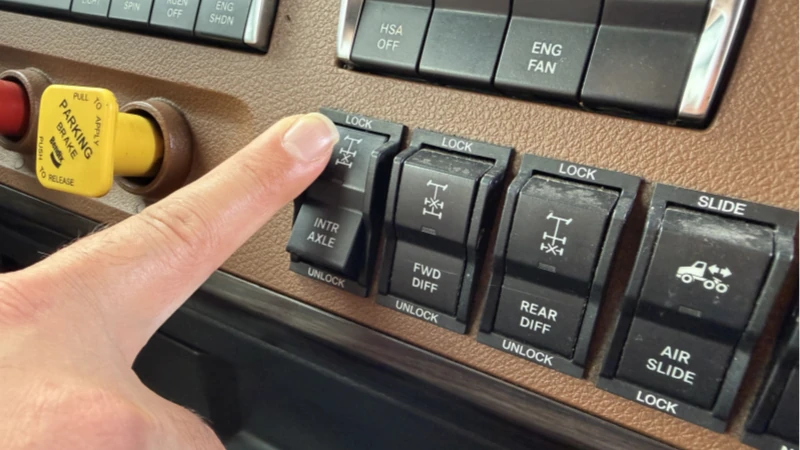
- Read your dashboard light: Flashing means the locker is commanded but not yet seated. Solid means a diff lock is engaged and active. It typically looks like an axle-and-wheel diagram ‘X’ or a locking symbol. Don’t apply throttle until that light goes solid.
Disengaging the Locker
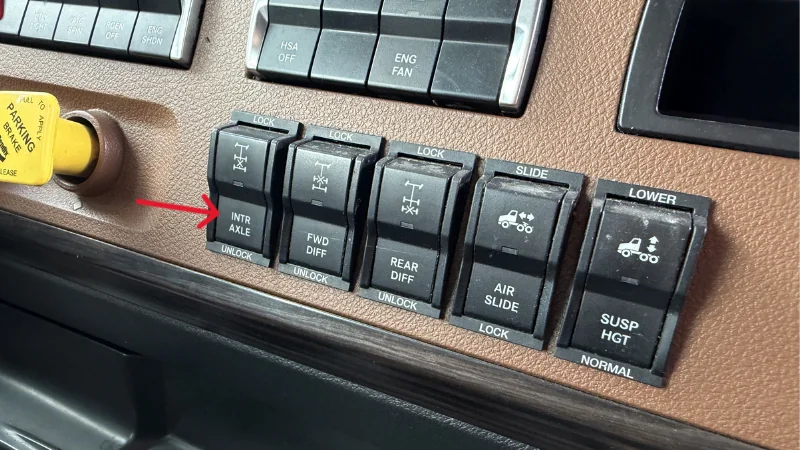
- Don’t expect it to release instantly: After hitting the switch, the gears may still be under load and unable to release right away.
- Take the pressure off: Ease off the throttle, slow down, or reverse a few feet. The locker will release on its own once the load is gone.
- Never force it: If the light stays solid, just give it a moment. Forcing disengagement under load can strip, bend, or break an actuator mechanism.
Simply put, here’s how a locked differential in a truck functions:
Step 1: Normal (Open): Spider gears allow wheels to spin separately during turns.
Step 2: Lock Activated: Actuator/solenoid → lock side gears → half-shafts turn together.
Step 3: Traction Outcome: 50/50 torque split → both wheels rotate at the same speed → optimal grip on mud or snow.
Related reading: Mastering your differential locker is just one part of operating a heavy truck smoothly. Another component that is easily destroyed by bad driving habits is the clutch brake. If you drive a non-synchronized manual transmission, check out our guide on what is a clutch brake and how it works to stop grinding gears and prevent costly transmission damage.
What are the Different Types of Lock Differentials?
Quick Answer: There are three main types of locking differentials used in trucks: manual lockers (driver-controlled), automatic lockers (engage automatically), and electronic lockers (driver-triggered via a switch or button). Each has different use cases, benefits, and trade-offs.
| Type | How it Works | Engagement | Best Use Case | Trade-offs |
|---|---|---|---|---|
| Manual Locker | The driver engages using a lever, dial, or cable mechanism. Fully mechanical, no electronics involved. | Full driver control, engage and disengage whenever needed | Serious off-road builds, competition, and extreme wheeling | Requires more driver attention and knowledge. No automatic fallback if you forget to engage or disengage |
| Automatic Locker | Locks both wheels together under power, unlocks automatically during turns when wheels need to move at different speeds | No driver input needed, reacts to wheel slip on its own | Frequent off-road use, consistent terrain challenges, and budget-friendly builds | Can feel unpredictable on the road. Steering can pull or snap during cornering as it locks and unlocks |
| Electronic Locker | Uses an actuator triggered by a dashboard button or switch. Behaves as a normal open differential until the driver commands it | Driver triggered via button or switch. Dash light confirms engagement | Daily drivers who also go off-road, modern trucks, and drivers who want the best of both worlds | Relies on electronics and actuator components. More parts that can fail compared to a mechanical locker |
Which Type of Diff Lock is Right For Your Truck?
When one wheel loses grip, an open differential just spins it faster, leaving you stuck. On Ontario cottage roads, mud season trails, or northern bush roads, that gets old fast. The right locker fixes that problem before it starts.
| Situation | Recommended Type | Why |
|---|---|---|
| Daily driving with occasional off-road (cottage roads, forest service roads) | Electronic Locker | Normal drivability year-round, lock up only when the trail needs it |
| Frequent off-road use (Ganaraska, Simcoe County trails, Quebec back country) | Automatic Locker | Handles mud, ruts, and Shield terrain without constant driver input |
| Hardcore wheeling or competition (Ontario Rock Crawling -OROC events, northern Ontario rock crawling) | Manual Locker | Maximum reliability for extreme situations, no electronics to fail in remote areas |
| Budget built for Canadian winters and rough seasonal roads | Automatic Locker | Cost-effective, handles repeated low-speed traction demands without electronic complexity |
| Remote northern travel (logging roads, BC or Manitoba backcountry) | Manual or Electronic Locker | Manual for pure mechanical simplicity, electronic for comfort on long paved stretches getting there |
When Should You Use a Locking Differential in a Truck?
A diff lock has a narrow, specific job. Using it outside that job can cause severe mechanical damage. Use your locking differential in low-traction situations, such as mud, sand, snow, deep ruts, rocky terrain, or any off-road condition where one or more wheels are at risk of spinning freely. Never drive with your diff locked at highway speeds or for extended periods on dry pavement.
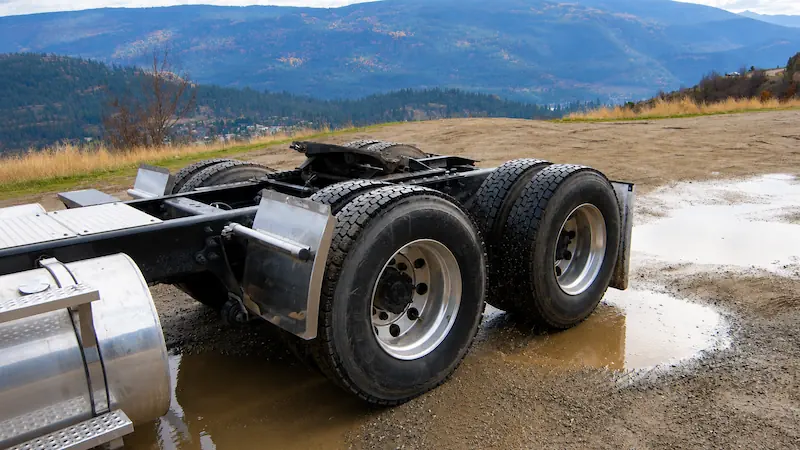
When to Use a Diff Lock
- Off-Roading: Essential for rock crawling or crossing deep ruts where a tire might lift off the ground.
- Low-traction Surfaces: Prevents “digging in” on deep mud, soft sand, or heavy snow by keeping both wheels spinning.
- Steep Climbs: Provides a consistent “push” up rocky or loose inclines where weight shifts off certain wheels.
- Heavy Towing: Maintains steady traction on boat ramps, gravel roads, or job sites under heavy loads.
- Controlled Descents: Helps the truck track straight during steep, rutted downhill engine braking.
When NOT to Use a Diff Lock

- Ontario 400-series Highways or city driving, as they are high-traction surfaces with dry asphalt, where wheels should spin at different speeds. Locking them forces the wheels to scrub against the pavement, causing excessive tire wear. When stuck in such a situation, pull over and call a professional truck tire repair technician immediately.
- Dry, paved turns because binding in the drivetrain can damage axle shafts.
- High-speed driving, since the loss of steering control becomes a real risk.
Important Note: The Ontario Ministry of Transportation (MTO) advises engaging the lock as you approach slippery conditions, not after you are already stuck and spinning. If you have manual (selectable) lockers, try to engage them before you enter a difficult section.

Locking Differential Vs. Limited-Slip Differentials
Limited-Slip Differentials (LSDs) and lockers both beat open differentials for traction, but work in different ways. LSDs are best for daily driving, snow, and light trails because they manage wheel slip smoothly. Lockers provide a 100% torque split for extreme mud or rock crawling, where maximum power to both wheels is mandatory.
| Feature | Locking Differential | Limited-Slip (LSD) |
|---|---|---|
| How it Works | Physically locks wheels together | Uses clutches to limit wheel spin |
| Traction Level | Maximum grip in any condition | Better than a standard open diff |
| On the Road | Can feel jerky or “chirp” tires | Smooth and silent like a car |
| Main Benefit | Gets you through deep mud, ice, or rocks | Stops one-tire spinning in rain |
What are the Signs of a Failing Locking Differential on a Truck?
Common signs of a locking differential problem include grinding or clicking noises when turning, the locker failing to engage or disengage properly, and uneven tire wear. When you drive through low-traction areas, your diff lock system works very hard behind the scenes. The moment you catch these signs, contact a professional truck repair specialist.
If something already feels off with your truck, here is what to watch for:
- Grinding or Popping Noises when Turning
These noises usually indicate that the locker is not fully disengaging, causing the axle to bind during normal turns. Left alone, that binding puts direct stress on the axle shaft, accelerating wear to the point of failure.
- Locker Won’t Engage or Activate
Typically, you hear a clunk when the switch is activated. A failing diff lock, however, won’t show resistance or movement in the truck’s wheel. The wheels still move freely through mud or snow, rather than locking up.
- Locker Won’t Disengage
This sign is serious. Driving on pavement with a stuck locker forces both axle shafts to fight through every turn. That torsional load is one of the more common ways axle shafts crack or snap. If your locker is stuck engaged, get it looked at before you drive it further.
- Vibration Through the Axle or Floorboard
Can point to damaged gears, worn bearings, or internal differential damage. A vibration that worsens under load is worth taking seriously before it reaches the axle shafts or the spindle.
- Warning light on the dashboard
Electronic lockers that fail to engage or disengage properly will often trigger a fault code or indicator light. Don’t ignore a locker warning light, especially if the truck is handling differently through turns. A differential inspection is relatively simple. If delayed, the effect can have a chain reaction, causing damage to drive axles, spindles, bearings, and more. If any of these signs sound familiar, schedule a truck differential repair service right away for an inspection.

Frequently Asked Questions
Keep your speed under 40 km/h with the diff lock engaged, and use it only on low-traction surfaces like mud, snow, or gravel. On dry pavement, a locked differential causes the wheels to bind through turns, which can wear out your tires quickly and damage your axle shafts. It is recommended to disengage on normal solid roads.
A limited-slip differential is better for everyday driving since it handles rain, light snow, and gravel smoothly without any input from you. A locking differential is better for driving on deep mud, rocks, or other terrain where a tire might lift off the ground. If you use your truck both on and off road, an electronic locker is the most practical choice since it works like a normal differential until you actually need to lock it.
The average cost to repair a differential locker on a truck depends on the complexity of the damage. An actuator replacement on a newer truck may cost $400 to $900 in parts and labor; a differential rebuild (bearings or seals) can cost roughly $500 to $1,000; and a full replacement can cost $2,500 to $4,000. An OEM-spec part will be more expensive than an aftermarket part.
Most off-road and heavy-duty pickup trucks come with a factory locking differential, including models from Ford, Ram, Toyota, Chevy, GMC, and Jeep. Many are electronic lockers activated by a dash button, while some GM trucks use an automatic locker that engages on its own. If your truck did not come with one from the factory, a locker can be added aftermarket on most trucks with a solid rear axle.