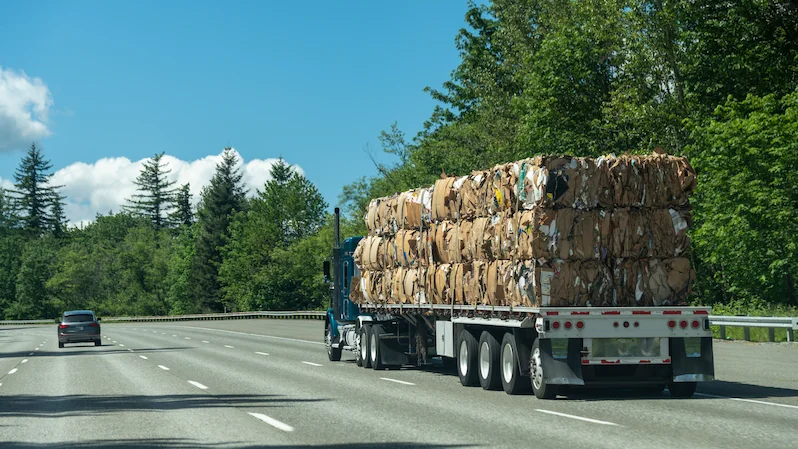
A truck or trailer can be within its total weight limit yet still have too much weight on a single axle. This can happen when cargo is unevenly distributed, a trailer is loaded incorrectly, or weight transferred through the fifth wheel puts extra pressure on the drive axles.
That is why understanding Gross Axle Weight Rating (GAWR) and Gross Vehicle Weight Rating (GVWR) matters. GAWR indicates how much weight an individual axle is rated to carry, while GVWR indicates the maximum loaded weight of the entire truck or trailer. Both matter when loading cargo, checking axle weights, and choosing replacement components.
For truckers and trailer owners in Ontario, another important difference is that manufacturer ratings don’t always match the legal axle weight limits enforced on provincial roads.
This blog explains how GAWR and GVWR work, how to calculate payload, why axle ratings sometimes exceed GVWR, and how Ontario determines legal axle weights. We also explain what excess axle loading can mean for spindles, bearings, and other components.
GAWR vs GVWR: What Are the Main Differences?
GAWR (Gross Axle Weight Rating) is the maximum weight an individual axle is designed to support. GVWR (Gross Vehicle Weight Rating) is the maximum total weight of a loaded truck or trailer. The manufacturer sets both ratings and lists them on the compliance label. Your vehicle must stay within both limits at the same time.
| Rating | What it limits | Where to find it | Compared against |
|---|---|---|---|
| GAWR | Weight carried by an individual axle | Compliance label on driver’s door jamb | Actual axle weight (Must also stay below MTO axle/tire width limits) |
| GVWR | Total loaded weight of a single vehicle or trailer | Compliance label / VIN plate | Actual Gross Vehicle Weight (GVW) |
| GCWR | Combined weight of the truck, trailer, and all cargo | Owner’s manual or towing guide | Actual combined scaled weight (Must also stay below Ontario RGW and SPIF legal maximums) |
For more detailed rules for fleets, see the 2024 Ontario Vehicle Weight and Dimension Guidebook. A truck can be below its GVWR and still exceed one axle’s GAWR. For example, a load placed too far forward may overload the steering axle even when the truck’s total weight is acceptable. That is why checking only the gross weight is not enough.
What Is GAWR (Gross Axle Weight Rating)?
Gross Axle Weight Rating is the maximum weight that the manufacturer allows an individual axle to carry. It includes the portion of the vehicle’s own weight resting on that axle, plus the load it supports. The actual axle weight is measured at the tires using a scale.
For example, if a truck’s compliance label shows GAWR RR 10,400 kg (22,928 lb), its rear axle is rated to support no more than that amount.
The rating applies to the total weight carried by that axle, not just the cargo. A label reading “GAWR 3500” works the same way, but you need to check the units. It means 3,500 kg if the label specifies kilograms, or 3,500 pounds if it specifies pounds.
Front and Rear GAWR (FR, RR)
Most truck labels identify the front axle as GAWR FR or FRT and the rear axle as GAWR RR. The front rating is often lower because the steering axle carries less of the vehicle’s load than the drive axles.
Load placement can change that balance. Moving cargo forward, adjusting the fifth-wheel position, or changing how a pusher axle carries weight can shift more weight onto the front or rear axles.
What factors determine GAWR?
An axle’s capacity depends on more than the axle beam itself. Manufacturers consider several components when determining GAWR, including:
- Axle beam: Supports the weight the axle carries.
- Spindles: Support the wheel hubs and bearings.
- Hub bearings: Support wheel loads and allow smooth rotation.
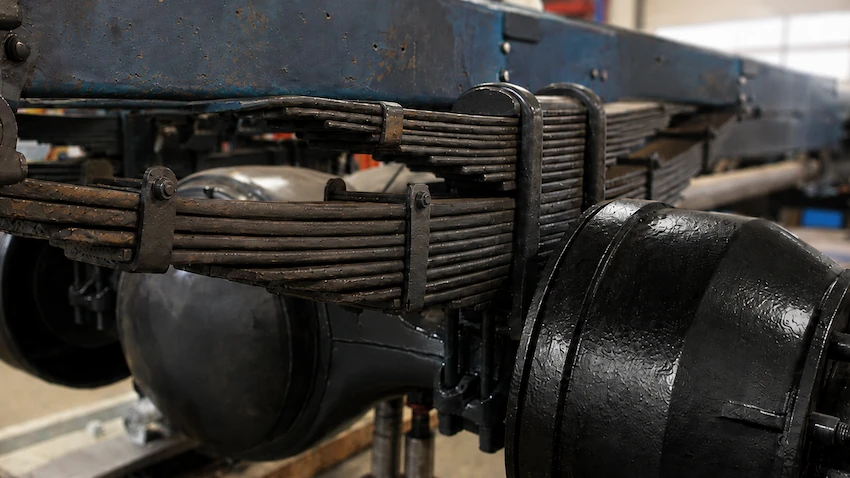
- Suspension springs and hangers: Support and distribute the vehicle’s weight.
- Wheels and tires: Must have sufficient load ratings for the weight they carry.
- Braking system: Must be suitable for the axle’s rated load.
The lowest-rated component limits what the complete axle assembly can safely carry. Installing lower-rated tires, bearings, or replacement spindles may reduce the axle’s safe load capacity. Similarly, adding stronger components alone does not automatically increase GAWR.

Can You Increase GAWR by Installing a Stronger Axle?
No, installing a heavier-duty spindle, axle, or spring does not automatically increase the manufacturer’s GAWR. The entire system, including bearings, suspension, wheels, and tires, must be suitable for the load, and any formal rating change requires appropriate evaluation and documentation.
What Is GVWR (Gross Vehicle Weight Rating)?
Gross Vehicle Weight Rating (GVWR) is the maximum weight a complete vehicle is designed to carry, as declared by its manufacturer. For a commercial truck, that includes the empty truck, body, fuel, driver, passengers, equipment, and cargo.
Ontario defines the manufacturer’s GVWR as the maximum weight a truck or trailer is safely capable of carrying. For example, a truck rated at 10,000 kg (22,046 lb) GVWR cannot exceed that total loaded weight, even if its individual axles could support more.
A smaller trailer with a GVWR of 3,175 kg (7,000 lb) follows the same rule. The figure includes both the trailer’s own weight and its cargo. It is not its payload capacity.
However, when hitched to a truck, a portion of that trailer weight (typically 10% to 15% for ball hitches, or 20% to 25% for fifth-wheels) transfers directly onto the truck’s chassis through the tongue or pin. This transferred weight counts toward the truck’s GVWR while it’s pulling, which is why balancing both vehicle ratings is so vital on Ontario roads.
Why the Axle Ratings Add Up to More Than the GVWR
Adding the front and rear GAWR often produces a number greater than the GVWR. That is normal. Each axle has its own load capacity, while the entire vehicle has limits based on its frame, suspension, brakes, and other systems.
A truck might have front and rear axle ratings totaling 17,000 kg but a GVWR of only 15,000 kg. You cannot load it to 17,000 kg. Both the GVWR and every GAWR still apply.
Where GCWR Fits
Gross Combination Weight Rating (GCWR) covers the maximum combined loaded weight of a towing vehicle and its trailer, as specified by the manufacturer. It is different from GVWR and GAWR.
Towing capacity also depends on the truck’s configuration, drivetrain, hitch and other limits. You cannot calculate it using GAWR alone. Trailer tongue weight or kingpin weight transfers onto the towing vehicle. That added weight counts toward the truck’s GVWR and affects its axle loads, particularly the drive axles of a highway tractor.
Ratings vs Actual Weight (GVW, Curb Weight and Payload)
A rating is a maximum. Actual weight is what the scale measures. Gross Vehicle Weight (GVW) is the vehicle’s weight as loaded at that moment. Curb weight is the vehicle’s weight without cargo or occupants, generally with standard equipment and operating fluids.
Payload capacity is the difference between GVWR and the relevant empty vehicle weight.
Payload capacity = GVWR − empty vehicle weight
Consider a trailer with a GVWR of 3,175 kg (7,000 lb) and an empty weight of 907 kg (2,000 lb). Its theoretical payload is 2,268 kg (5,000 lb), before accounting for added equipment.
That cargo must also be positioned so the trailer axles stay within their GAWR.
A commercial weigh-scale ticket may show a legal gross weight but an overloaded individual axle or axle group. The total weight does not cancel the axle violation.
Where to Find GAWR and GVWR
Check the truck’s compliance label. It is normally on the driver’s door edge, door pillar or another approved position near the driver’s seat.
Check the trailer’s compliance label. Canadian regulations place it on the forward half of the trailer’s left side, where it can be read externally.
Check with the manufacturer. If the label is missing or unreadable, request the original specifications and rating documentation before relying on an estimated figure.
The label may also display the Vehicle Identification Number (VIN), tire information and manufacturing details.
GAWR and GVWR on Trailers
Every trailer has its own GVWR and axle ratings. On a tandem dump trailer, each axle must carry its share of the load without exceeding its rated capacity.
The trailer’s total weight also includes any load transferred through its hitch or kingpin. For example, a trailer with a GVWR of 6,350 kg (14,000 lb) is rated for that total loaded weight, not 6,350 kg of cargo.
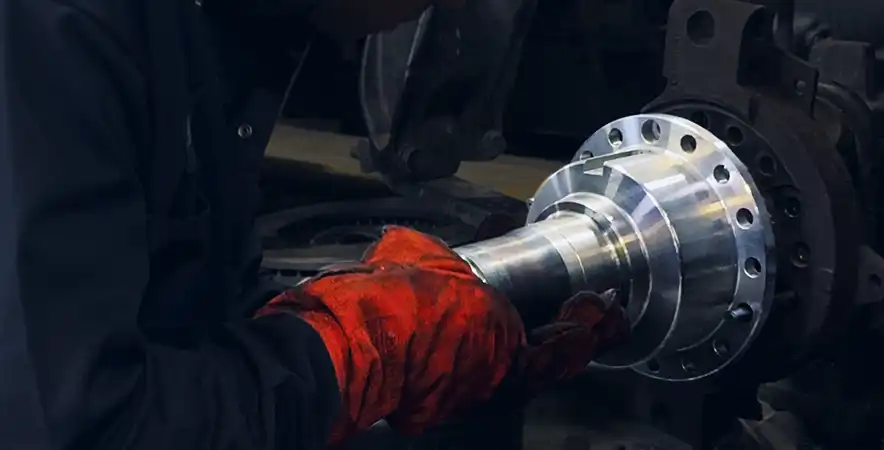
Trailer axle capacity depends on the axle beam, spindles, bearings, hubs, suspension, and tires. If you need to replace a damaged axle, the replacement must meet the original specifications.
Installing a lower-rated axle can reduce the trailer’s safe carrying capacity even though the original GVWR sticker remains in place. Proper trailer axle replacement starts with checking those ratings.
How Does Ontario Determine Legal Axle Weight?
In Ontario, a manufacturer’s weight rating and the legal weight permitted on the road are related but not the same. The limit depends on the vehicle’s axle configuration, dimensions and other applicable rules.
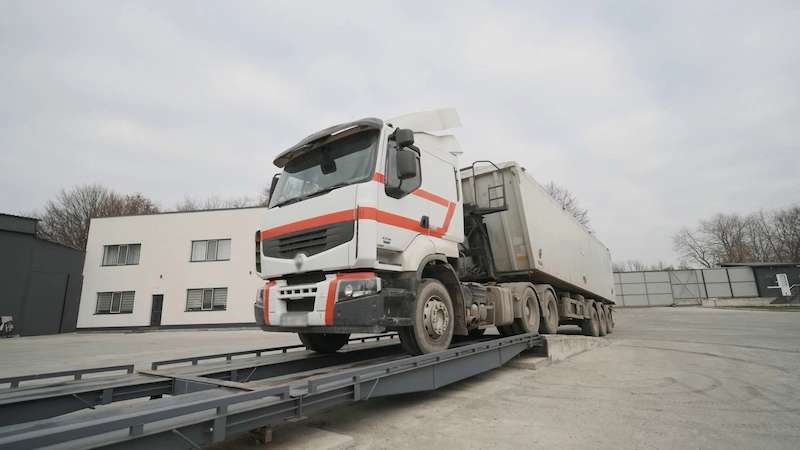
For applicable Safe, Productive, Infrastructure-Friendly (SPIF) vehicle configurations, the Ministry of Transportation considers the verified manufacturer’s axle rating (or the applicable default when it cannot be verified), the weight permitted by tire width and the axle-unit limit for that configuration. The lowest applicable value controls that axle or axle group’s maximum under the relevant chart. Also consider axle spacing, vehicle configuration, and overall weight restrictions.
Ontario Regulation 413/05 sets out the applicable weight and dimension rules: https://www.ontario.ca/laws/regulation/050413
For example, the relevant SPIF charts may use tire-width factors of 10 or 11 kg per millimeter of combined tire width, depending on axle type. Some charts apply a default front-axle rating when the manufacturer’s GAWR cannot be verified. These are configuration-specific calculations, not universal allowances for every truck.
Registered Gross Weight (RGW) is different from GVWR. RGW relates to the weight covered by the vehicle’s registration; GVWR is the manufacturer’s maximum rated loaded weight. Paying for a higher RGW does not increase GAWR or GVWR.
Ontario’s commercial vehicle safety requirements also use weight thresholds for inspections and operator obligations, with exemptions and different criteria depending on the requirement. dump truck capacity.
For configuration-specific weight limits, see our guides to semi-truck axle configurations, tandem axles, and tri-axle dump truck capacity.
Can You Be Under GVWR but Over an Axle’s GAWR?
Yes. A truck can be below its GVWR and still overload one axle if the load is unevenly distributed. For example, a truck rated for 15,000 kg overall may weigh only 14,000 kg but carry 10,500 kg on a rear axle rated for 10,000 kg. That axle is overloaded by 500 kg even though the truck is below its GVWR.
Checking the total scale weight alone is not enough. Drivers also need to check individual axle and axle-group weights against manufacturer ratings and applicable road limits.
What Happens When an Axle Runs Over Its GAWR?
Repeated overloading puts extra stress on the parts supporting that axle. Damage can develop gradually, although a severe overload can also cause immediate failure.
When we inspect an axle with signs of excessive loading, we look beyond the obvious damaged component. The spindle, hub, bearings, and suspension work together, so wear in one area may point to problems elsewhere.
Common problems include:
- Worn or bent axle spindles
- Failed wheel bearings and overheated hubs
- Cracked springs, flattened leaf springs and damaged hangers
- Excessive kingpin wear on steering axles
- Uneven tire wear and tire damage
- Reduced braking performance and brake fade
If one axle repeatedly wears out components faster than the others, check the load distribution and component ratings before replacing parts.
Our axle spindle replacement, truck suspension repair, and axle repair services address damaged components, but the cause of repeated overloading also needs attention.
Keep Your Truck and Trailer Axles Within Their Ratings
GAWR tells you what each axle is rated to carry; GVWR tells you the vehicle’s maximum loaded weight. Neither rating replaces Ontario’s legal road-weight rules or a check of the actual load on each axle.
At Axle Spindle, we have over 20 years of experience repairing commercial truck and trailer axles, spindles, and suspension components. Whether you need a spindle replacement, trailer axle repair, or mobile service, our technicians can help at our Mississauga shop or across the GTA and Southern Ontario.

Frequently Asked Questions
No. GAWR is the manufacturer’s maximum rating. The actual axle weight is measured at a scale and changes with cargo, fuel and load placement.
Not simply by installing stronger parts. Rating changes require appropriate manufacturer or qualified alterer involvement and supporting documentation. Canada’s Motor Vehicle Safety Regulations set requirements for alterations that affect these ratings.
No, GVWR and Registered Gross Weight (RGW) are entirely different thresholds. GVWR is a permanent structural safety limit set by the vehicle’s manufacturer, while RGW is a variable legal operating limit determined strictly by the licensing fees paid on your truck’s registration permit.
Towing a trailer that exceeds your vehicle’s weight limits puts extra strain on the engine, transmission, brakes, suspension, and axles. It can cause overheating, faster component wear, reduced braking performance, and poor vehicle handling. Excess weight also increases the risk of tire failure and damage to axle components, making the vehicle harder to control safely.
GAWR RR identifies the Gross Axle Weight Rating for the rear axle position. GAWR FR or FRT identifies the front. Check the label for the rating and its units.