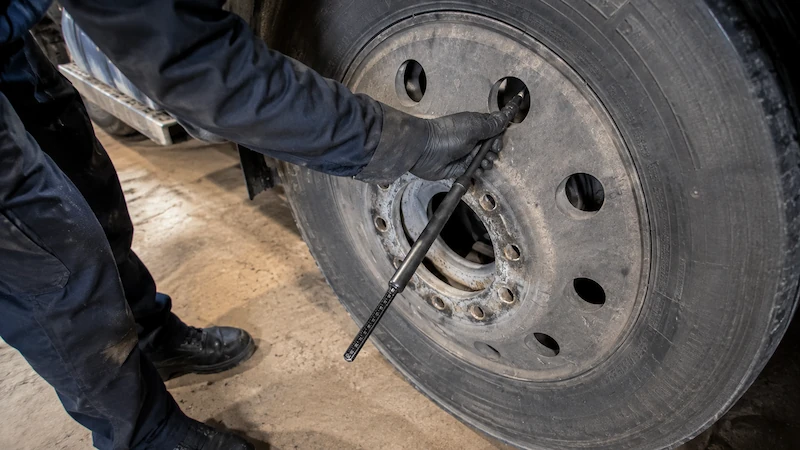
Truck tire pressure is not a one-size-fits-all number. It depends on various factors such as truck model, size of the tire, position of the axle, its load, tire design, and other conditions. Getting that number right is important because low pressure can reduce braking and steering performance, increase fuel consumption and heat buildup, and cause uneven or premature tire wear.
For most pickup trucks, you can check the recommended pressure for cold tires on the driver side door placard. Commercial trucks need a more precise calculation based on axle weight and the tire manufacturer’s load-and-inflation table. The PSI written on the tire sidewall shows the pressure associated with the tire’s maximum rated load, not automatically the correct pressure for daily driving.
This guide completely explains the recommended pressures, how to get the cold pressure for each axle, and adjust truck tire pressure. But before comparing specific PSI ranges, let’s first understand what the right tire pressure means for your truck.
What Is the Right Truck Tire Pressure?
The right truck tire pressure is the cold PSI required to support the load carried by each axle. Use the driver-side door placard for original pickup-truck fitments. For commercial trucks, use the measured axle weight and the tire manufacturer’s load-and-inflation guide to find the correct pressure.
The table below shows how typical pressure ranges differ by truck type and axle position.
| Truck type | Typical PSI range | Notes |
|---|---|---|
| Light-duty pickup (half-ton: F-150, Sierra 1500, Ram 1500) | 35-40 PSI | Check the driver’s-door placard. Front and rear settings may differ. |
| Three-quarter-ton / one-ton pickup (2500/3500, loaded) | 50-80 PSI | Load, tire rating, and single or dual rear wheels affect the target. |
| Medium-duty, box, or delivery truck | 70-95 PSI | Use the placard or match measured axle weight to the tire data table. |
| Semi-truck steer tires (front, loaded) | 100-130 PSI | Set pressure from actual front-axle weight and tire specifications. |
| Semi-truck drive and trailer tires (rear, loaded) | 85-120 PSI | Dual and wide-base single applications use different table values. |
These figures are general operating ranges, not specifications for every truck. A tire’s load capacity changes with pressure, so the same tire size may require a different pressure on another axle or vehicle. This is because each axle can carry a different amount of weight.

Should You Use the Door Placard or Tire Sidewall Pressure?
For everyday pickup-truck driving, go with the door placard. That number is the one the vehicle manufacturer chose for the truck’s original tire size and rated load, so it’s tuned to how the truck actually drives.
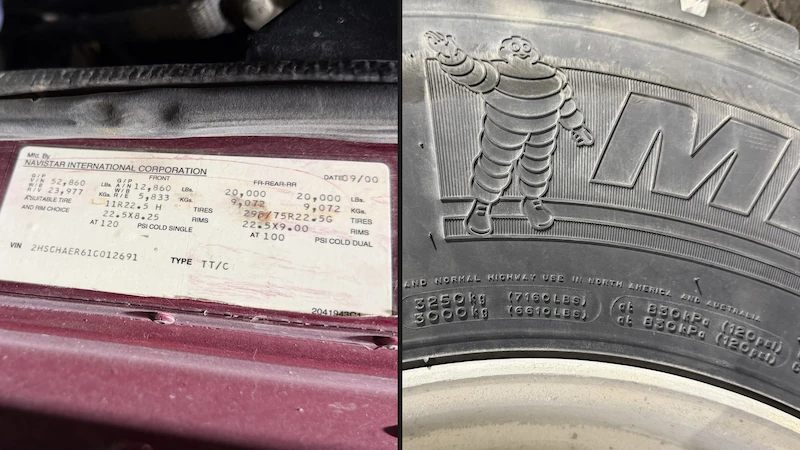
The sidewall figure is a limit, not a suggestion. It tells you the most air the tire can safely hold when it’s working at full load, which is a very different thing from the pressure your truck wants day to day. A tire might be rated to 80 PSI on the sidewall while the placard calls for just 60 front and 70 rear. Inflate all four to 80 and, lightly loaded, you’ll feel a stiffer ride and a smaller contact patch where the tire meets the road.
What Does Cold Tire Pressure Mean?
Cold tire pressure means that the tire has not been driven recently or has been stationary long enough to reach the surrounding air temperature. Driving creates flex and heat, which increase the pressure inside the tire. Therefore, a warm reading may give you a PSI higher than the true cold inflation pressure.
Check tire pressure:
- Before driving
- After the truck has remained parked for several hours
- Before direct sunlight heats one side of the vehicle
- At a similar time of day during routine inspections
Do not release air from a hot tire merely because its pressure exceeds the cold specification. The pressure may return to the correct level after the tire cools down.
Truck Tire Pressure by Truck Type
Truck tire pressure changes based on the size of the truck and the load. The usual settings for light-duty pickups, heavy-duty trucks, and semis can differ considerably. Looking at each type separately gives you a clearer idea of the pressure range to expect and what may change it.
Light-Duty and Half-Ton Pickups (F-150, Sierra 1500, Ram 1500)
Most light truck tires have a pressure between 35 and 40 PSI cold. That includes many Ford F-150, Chevrolet Silverado 1500, GMC Sierra 1500, and Ram 1500 configurations, but the badge does not give you the final number.
The towing package, payload, or even the new tire may affect this specification. The front and rear may also have different tire pressure because they carry different loads on each axle.
If you install a tire with another size or load range, do not copy the maximum PSI from its sidewall. Confirm the fitment with the vehicle or tire manufacturer.
Three-Quarter-Ton and One-Ton Trucks (2500/3500, Dually)
Heavy pickups typically have inflation pressures of 50-80 PSI, depending on whether it’s front or rear. A loaded Ram 3500 dually does not put the same stress on its tires as the same truck running empty. That is why a static “80 PSI everywhere” rule can produce a hard ride, poor traction, and centre tread wear when the rear axle carries little weight.
Some owners reduce rear pressure when the truck is empty and raise it before towing or hauling. Do it only when you have an unloaded inflation pressure from your truck manufacturer or when the axle weight is low and the tire manufacturer’s load and inflation chart says so.
Never drop below the pressure needed for the actual load. If you use helper bags or another load-leveling setup, remember that suspension support does not increase the legal payload or tire capacity. Our comparison of air suspension and leaf springs completely explains that limit.
Load range letters such as C, D, E, and F describe a tire’s load and pressure capability within its size. A higher letter usually means the tire can carry more weight at a higher maximum cold pressure. It does not mean every E- or F-rated tire should run at its sidewall maximum. Tire size, axle weight, single or dual use, and the load table still decide the minimum safe pressure.
Semi, Commercial, and Fleet Trucks
Semis usually run 100–130 PSI on loaded steer tires and 85–120 PSI on drive and trailer tires, but vehicle class is only a starting point. tire pressure must support the real axle weight, not a guess based on vehicle class. To get it right, weigh the loaded truck axle by axle and look each weight up in the tire maker’s data book. It’s the most reliable way to spot an overloaded steer axle or a tire that can’t handle the load.
Pressure can also differ by tire position because steer, drive, and trailer tires do different jobs. A steer tire carries steering and braking forces, while drive tires transfer engine torque. Dual tires also need closely matched pressure. One low tire in a dual pair forces its partner to carry more load and can build damaging heat.
Why Correct Truck Tire Pressure Matters
Correct truck tire pressure helps the tire carry its assigned load and maintain a stable contact patch. Too little air makes the sidewall flex harder with every rotation. That flex creates heat, increases rolling resistance, and can damage the tire from the inside. On a loaded truck at highway speed, the result can be tread separation or a blowout. Underinflation can also reduce steering precision, increase stopping distance, and lower usable load capacity.
Overinflation can create another wear pattern too. It can crown the tread, concentrate wear in the centre, reduce the contact patch, and make the ride harsh. This may become more noticeable when the truck is lightly loaded. It also leaves the casing more exposed to pothole and impact damage. A tire must have enough pressure to carry the load without exceeding the limits of the tire, wheel, valve, or vehicle.
Does Truck Load Change the Required Tire Pressure?
Yes, it can. The weight a truck is carrying affects the pressure it needs. A heavier load demands more tire load capacity, and a tire’s load capacity rises as you add inflation pressure, up until it hits its rated limit. So as the load on an axle goes up, the pressure that axle needs goes up too. Take a heavy-duty pickup as an example. Its front axle carries a fairly steady weight, but the rear axle changes depending on what’s in the bed. So the manufacturer might specify:
- 60 PSI in the front tires at all times
- 65 PSI in the rear tires when running light or empty
- 80 PSI in the rear tires when carrying the maximum rated load
The exact values depend on the truck, wheel, tire, and manufacturer guidance. Commercial drivers should weigh each axle, spot the position carrying the heaviest load, select pressure from the tire manufacturer’s load-and-inflation table and apply a suitable operating margin.
Pressure must never compensate for an overloaded axle or tire. Reducing cargo weight remains necessary when the truck exceeds a rated limit.
Should Front and Rear Truck Tires Have the Same Pressure?
Not necessarily, and often they shouldn’t. The two axles do very different jobs. The front carries the engine and handles the steering load, while the rear takes on the cargo, hitch weight, or fifth-wheel load. Since those loads rarely match, manufacturers may specify different pressures to support these unequal loads.
A pickup placard might state:
| Axle position | Example cold pressure |
|---|---|
| Front | 60 PSI |
| Rear | 70 PSI |
A commercial fleet may use:
| Tire position | Example fleet target |
|---|---|
| Steer tires | 105 PSI |
| Drive tires | 95 PSI |
| Trailer tires | 100 PSI |
These values only illustrate position-based differences. Operators must use vehicle-specific and tire-specific data.
Worn kingpins can cause steering play, wandering, and uneven front-tire wear. Changing the tire pressure will not correct movement inside the steering knuckle.

How Do You Calculate Commercial Truck Tire Pressure?
Calculating the correct pressure for a commercial tire is fairly straightforward. You need to know how much weight each tire carries, and what the manufacturer’s load table says it takes to carry it. The steps below show how to find the tire load and match it with the proper pressure.
- Weigh the truck under normal operating load.
- Record steer, drive, and trailer axle weights.
- Determine whether each axle uses single or dual tires.
- Identify the exact tire size, load range, and model.
- Find the corresponding manufacturer load table.
- Calculate the load per tire.
- Use the heaviest wheel position when individual wheel weights are available.
- Select the pressure that supports the load.
- Add an operating margin when permitted by fleet policy and manufacturer guidance.
- Confirm that the pressure remains within all wheel and tire limits.
What this looks like on a real truck
A steer axle weighs 12,000 pounds and uses two tires.
12,000 ÷ 2 = 6,000 pounds per tire
From there, you head to the manufacturer’s single-tire load table and find the pressure rated to support at least 6,000 pounds.
Now look at the drive axles. Say a drive group weighs 34,000 pounds and rides on eight tires in a dual setup:
34,000 ÷ 8 = 4,250 pounds per tire
Here is the point. That 4,250 figure is just an average, and it assumes every tire is pulling equal weight. In the real world they rarely do. A load that sits heavier on one side, or a trailer that isn’t packed evenly, can leave a single tire position carrying noticeably more than the others. So, it’s always better to weigh each tire individually rather than taking average values for the entire axle.
What Pressure Should You Use When Towing?
Towing changes the equation, and it pulls two separate sets of tires into play: the ones on your truck and the ones on the trailer. Start with the truck manufacturer’s towing pressure guidance, then check the trailer’s tires against their own spec.
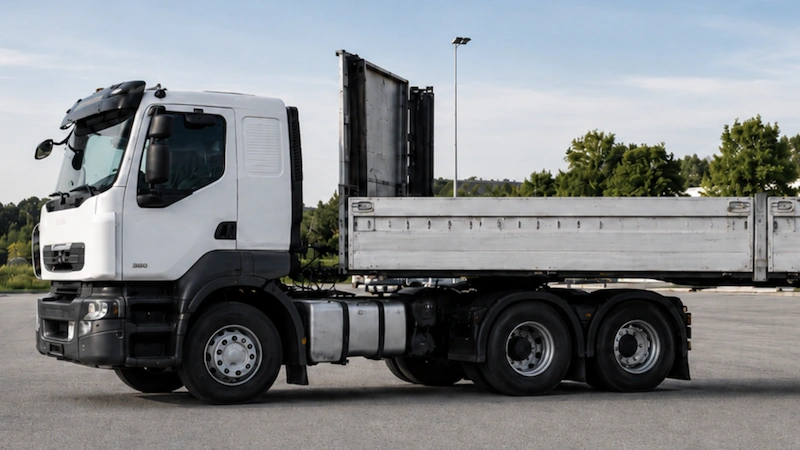
Before towing:
- Check the truck’s front and rear cold pressures.
- Check every trailer tire.
- Check the spare tires.
- Confirm tongue or pin weight.
- Confirm axle and tire load ratings.
- Inspect valve stems and extensions.
- Recheck pressure after major temperature changes.
The rear truck tires may require higher pressure when towing because the trailer adds load to the rear axle. The required change depends on the truck’s placard, owner guidance, tire size, and measured axle weight.
Trailer tires often use different pressure specifications from the tow vehicle. Never assume that the truck and trailer require the same PSI.

Why Must Dual Truck Tires Have Matching Pressure?
Dual tires should have closely matched pressure, size, tread depth, and overall diameter. A mismatch can cause one tire to carry more load than the other.
When one dual tire has lower pressure:
- The better-inflated tire may carry excess weight.
- The underinflated tire may flex and overheat.
- Both tires may develop irregular wear.
- The pair may have different rolling circumferences.
- Hidden damage may develop between the tires.
Measure the inner and outer dual tires with an accessible, reliable valve system. Inspect valve extensions for leakage, movement, and contact with the wheel.
How to Check and Set Truck Tire Pressure
Check pressure when the tires are cold. Transport Canada defines a cold check as a vehicle parked for at least three hours or driven no more than 2 km. For a pickup, start with the door placard. For a commercial truck, use the pressure established from axle weight and the tire load table.
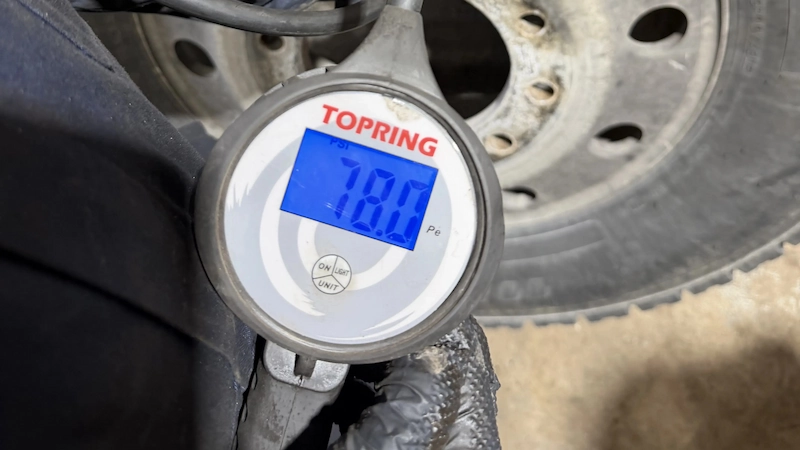
Choose a tire pressure gauge for truck use with a rating above the highest pressure you expect to measure. A cheap glovebox gauge that stops at 60 PSI cannot read a steer tire that needs more than 100 PSI. For fleet checks, we use a calibrated commercial gauge that covers the full operating range.
- Read the vehicle placard or confirm the load-table target for each axle.
- Remove the valve cap and press the gauge squarely onto the valve stem.
- Record each cold reading, including inner duals and the spare.
- Add air or release it in small amounts.
- Recheck until the gauge settles within 2-3 PSI of the target, or within the tighter tolerance set by your fleet.
- Replace the valve cap and inspect the valve for leakage or damage.
TPMS helps identify a drop while the truck is moving, but treat it as a warning system. Verify the reading with a known, accurate gauge.
What Tools Do You Need to Check Truck Tire Pressure?
A reliable truck tire pressure kit includes:
- A calibrated digital or dial gauge
- A dual-head chuck for dual wheels
- A high-capacity air compressor
- A clip-on inflation chuck
- Replacement valve caps
- Valve-core tools
- A tread-depth gauge
- An infrared thermometer for comparative checks
- Soap solution for external leak detection
- A flashlight for tire and wheel inspection
An infrared thermometer can identify temperature differences, but it cannot diagnose every tire problem. A hotter tire may indicate low pressure, excess load, brake drag, bearing issues, sunlight exposure, or road conditions.
How Often Should You Check Truck Tire Pressure?
Pickup owners should check tire pressure at least monthly and before towing, hauling, or taking a long trip. Commercial drivers should inspect tire condition and inflation as part of their regular pre-trip process.
Pressure checks become more important when:
- Outdoor temperatures change sharply
- The truck carries a new load
- A trailer is attached
- A tire has been repaired
- The vehicle has remained parked for an extended period
- One tire shows unusual tread wear
- The TPMS warning light activates
A visual inspection cannot confirm proper inflation. A commercial tire can appear normal while remaining significantly underinflated, especially in a dual-wheel assembly.
How Does Temperature Affect Truck Tire Pressure?
Air pressure changes with temperature. it drops when the air gets colder and rises as it warms. A common rule of thumb is that tire pressure shifts by roughly 1 PSI for every 10°F change in temperature. For example, a tire set to 70 PSI during warm afternoon conditions may display a lower cold pressure during a freezing morning. That doesn’t mean it’s leaking, the air inside has just contracted in the cold.
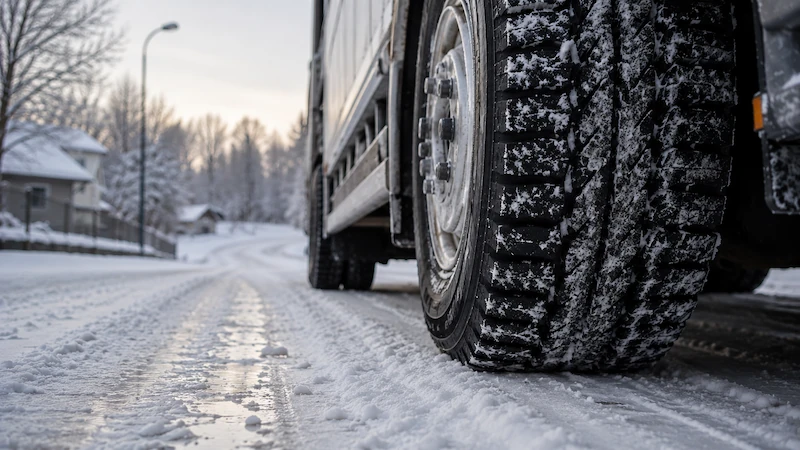
You should still adjust the tire at the correct cold pressure for the present environment. Do not run the tire pressure lower than recommended, because there might be warm weather later on.
Can TPMS Replace Manual Pressure Checks?
The tire pressure monitoring system supports inspections but does not replace them. TPMS alerts drivers to pressure loss, but systems vary in accuracy, warning thresholds, sensor position, and temperature compensation. Some systems issue a warning only after pressure has dropped substantially.
Manual checks still help you with:
- Gradual pressure loss
- Gauge-to-sensor differences
- Damaged valve stems
- Uneven dual-tire pressure
- Tread damage
- Sidewall cuts
- Embedded objects
- Irregular wear
Commercial fleets can use direct TPMS, automatic tire inflation systems, or pressure monitoring integrated with telematics. These systems improve visibility when fleets also maintain accurate pressure targets and inspection procedures.
What Are the Signs of Incorrect Truck Tire Pressure?
Incorrect pressure often appears with changes in handling, temperature, tread wear, and fuel use.
| Symptom | Possible pressure-related cause |
|---|---|
| Wear on both shoulders | Underinflation |
| Wear near tread centre | Excessive pressure |
| Vehicle pulls to one side | Unequal pressure or alignment issue |
| Steering feels slow | Low front-tire pressure |
| Harsh ride | Excessive pressure for the load |
| Repeated pressure loss | Puncture, valve leak, or wheel issue |
| One tire runs hotter | Low pressure, overload, or internal damage |
| Fuel use increases | Higher rolling resistance |
Pressure is not the cause of every wear pattern. Alignment issues, suspension condition, wheel balance, driving style, axle geometry, and tire design also affect tread wear.

How Much Pressure Loss Is Normal?
Tires can lose small amounts of air through natural permeation. Larger or repeated loss usually can mean a leak, valve problem, wheel defect, puncture, or temperature change.
Investigate a tire when it:
- Requires frequent inflation
- Loses pressure faster than adjacent tires
- Shows a TPMS warning repeatedly
- Produces bubbles during a leak test
- Has a damaged valve stem
- Contains a nail, screw, or other object
- Shows sidewall or bead damage
Do not rely on sealant as a permanent repair unless the tire manufacturer and repair provider approve the application. A qualified technician should inspect the tire internally when puncture damage may have affected the casing.
Can You Drive With Low Truck Tire Pressure?
You should not continue normal operation with significantly low pressure. This can reduce load capacity and increases heat generation.
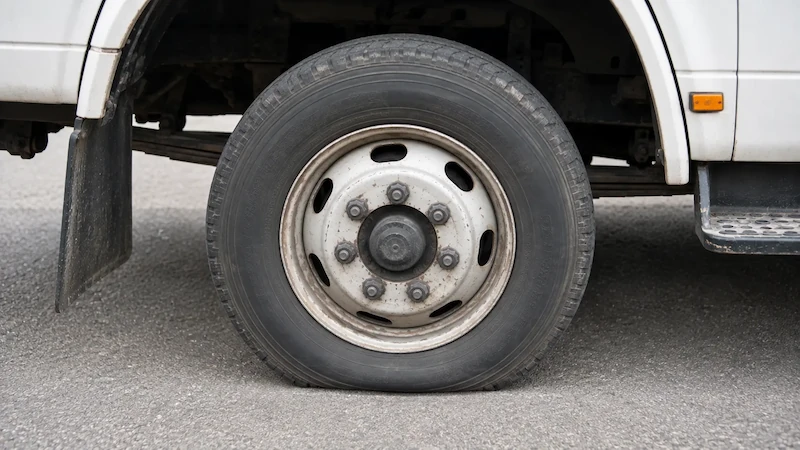
If you see any of these symptoms it’s better to stop in a safe location:
- The tire appears visibly low
- Steering or handling changes suddenly
- The TPMS warning flashes or appears with vibration
- The tire produces unusual noise
- Pressure falls rapidly
- The tire smells hot
- The sidewall shows bulging or damage
A tire that has operated while severely underinflated may contain hidden structural damage. Inflating it again does not automatically make it safe. Commercial truck tires can fail violently during inflation when the casing has sustained damage. Trained personnel should inspect and inflate suspect tires using appropriate equipment and safety procedures.
Does Nitrogen Change the Recommended Truck Tire Pressure?
Nitrogen does not change the required cold inflation pressure. A tire that requires 100 PSI still requires 100 PSI whether it contains nitrogen, compressed air, or a compatible mixture. Nitrogen may reduce moisture and pressure loss in some controlled applications. However, regular compressed air already contains mostly nitrogen. Maintenance quality matters more than the gas label. Use clean, dry inflation equipment and maintain the specified pressure.
Should You Lower Truck Tire Pressure for Off-Road Driving?
Some off-road conditions use lower pressure to increase tire footprint and surface conformity. This practice requires careful speed, load, wheel, and tire management. Lower pressure can increase:
- Sidewall flex
- Heat generation
- Bead-separation risk
- Wheel damage
- Steering response changes
- Tire damage from rocks or debris
Reinflate the tires before returning to normal road speed. Follow tire, wheel, and vehicle manufacturer guidance for off-road pressure changes.
Find Your Truck’s Exact Number
Correct tire pressure is one of the simplest, cheapest things you can do to protect your truck, your tires, and everyone sharing the road with you. It costs a few minutes and an accurate gauge, but it pays back in safer stops, steadier handling, better fuel economy, and tires that go the distance. If your truck has non-original tires, modified suspension, a service body, or a major axle-weight change, ask the vehicle or tire manufacturer for a documented setting. Guesswork is not worth a casing failure.

Frequently Asked Questions
Yes. Expect a drop of about 1 PSI for every 5°C, or roughly 10°F, decrease in temperature. Check the tires cold after a major weather change and add air to restore the recommended setting.
Often, especially on a three-quarter-ton or one-ton truck, a lower rear pressure can improve ride and contact when the bed is empty. Make the change only when the manufacturer provides an unloaded specification or a load table and measured axle weight support it. Stay within all vehicle, tire, rim, and placard requirements.
The right number is not a universal PSI. It is a cold pressure tied to your truck, tire, axle position, and actual load. Pop the driver’s door open, find the placard, and set your tires cold this week. If you run a commercial truck, put each loaded axle on a scale and use the tire data book before the next haul.
Forty PSI may be correct for some light-duty pickups and too low for certain heavy-duty trucks. Check the door placard, tire specification, and current load before selecting a pressure.
Eighty PSI is common for some load-range E pickup tires and commercial applications. It may represent a loaded setting or maximum rated pressure rather than the correct everyday pressure.
No. Inflate truck tires to the pressure required by the vehicle specification and actual load. Do not use maximum sidewall pressure automatically.
Towing may require higher rear pressure when the trailer increases rear-axle load. Follow the truck manufacturer’s towing guidance and confirm axle weights.
A hotter tire may have lower pressure, greater load, internal damage, brake drag, bearing friction, or different sunlight exposure. Stop and inspect the vehicle safely.
You can record hot pressure for monitoring, but you should set normal inflation pressure from a cold reading. Do not bleed a healthy hot tire to its cold specification.
Dual tires should use the pressure required for their shared load according to the tire manufacturer’s dual-load table. Both tires in the pair should have closely matched pressure.
Often, but not always. A different tire size or load rating may require professional evaluation. The replacement tire must still support the truck’s load at the selected pressure.