The biggest job of a commercial truck axle isn’t just turning the wheels. it must also support a massive amount of weight when the vehicle is fully loaded. Heavy-duty trucks commonly use full-floating rear drive axles because their wheel hubs and bearings support substantial loads without relying on the axle shafts for wheel support. , Passenger vehicles, SUVs and lighter pickup trucks often rely on semi-floating axles because they offer a simpler, lighter, and less expensive construction. In a semi-floating axle, the axle shaft does two jobs. It transfers power to the wheels while also helping support the vehicle’s weight.
A full-floating axle works differently. The axle housing, spindle, and wheel hub bearings carry the weight, leaving the axle shaft to transfer power to the wheels. This design also makes repairs easier because technicians can usually remove the axle shaft without taking off the wheels or hub. Even if the axle shaft breaks, the hub and bearings still support the wheel.
Understanding the differences helps you identify which axle design suits towing, commercial hauling, off-road driving, and everyday transportation. Let’s take a look at how both designs work, why heavy trucks use full-floating axles and which parts need attention.
Full-Floating vs Semi-Floating Axles: What Are the Main Differences?
A semi-floating axle uses its axle shaft to drive the wheel and support the vehicle’s weight. A full-floating axle supports the wheel hub on bearings around a spindle at the end of the axle housing. The housing and spindle carry the weight, while the shaft transmits turning force, called torque. Heavy truck drive axles use the full-floating design.
| Feature | Semi-Floating Axle | Full-Floating Axle |
|---|---|---|
| Weight support | Axle shaft carries the load | Axle housing, spindle and hub bearings carry the load |
| Axle shaft function | Transmits torque and handles weight and cornering loads | Transmits driving torque |
| Wheel bearings | Usually one outer bearing supporting the shaft | Two tapered roller bearings supporting the hub |
| Wheel attachment | Wheel mounts to the axle shaft flange | Wheel mounts to a separate hub |
| Broken axle shaft | Wheel separation is possible on certain designs | Wheel remains supported by the hub and spindle |
| Common applications | Cars, SUVs and many light pickups | Heavy truck drive axles and many heavy-duty pickups |
The key question is simple. does the axle shaft carry the truck’s weight, or does it just turn the wheel? That difference affects how the axle is built, maintained, and repaired.
What Is a Semi-Floating Axle?
Unlike a full-floating axle, a semi-floating axle uses its shaft to do two jobs. it transfers power to the wheels and helps support the vehicle’s weight.
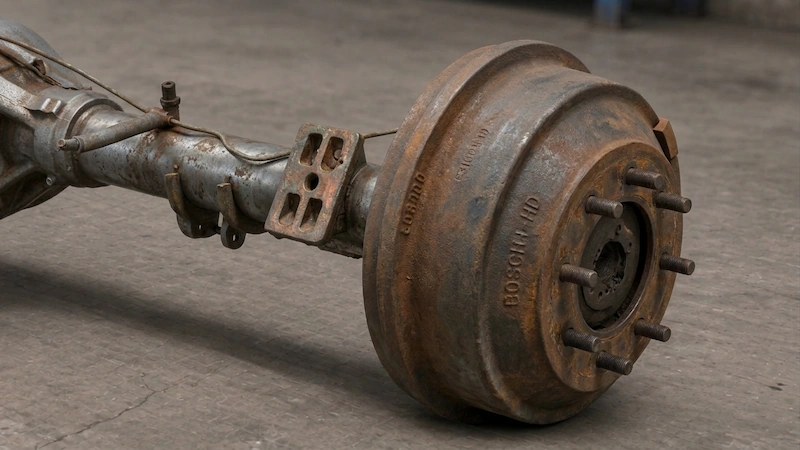
Here’s how a semi-floating axle works:
- Axle shaft and differential: The inner end of the axle shaft has splines (grooves) that connect it to the differential, which distributes power to the driving wheels.
- Wheel attachment: The wheel mounts directly to a flange at the axle shaft’s outer end. A bearing near the end of the axle housing supports the shaft.
- Weight and load support: Since the wheel attaches directly to the shaft, the shaft also handles bending forces when the vehicle turns, hits bumps, or carries a load.
- Axle shaft retention: Some semi-floating axles use a C-clip inside the differential to hold the shaft in place, while others use a bearing retainer plate. With certain C-clip designs, a broken shaft can let the wheel and shaft move outward.
- Simpler construction: Semi-floating axles generally have fewer components, weigh less, and cost less to manufacture than full-floating axles.
For cars, SUVs, and many light-duty pickups, this design provides reliable performance for everyday driving and hauling within the manufacturer’s rated limits.
What About Three-Quarter Floating Axles?
A three-quarter floating axle sits between the other two designs. Its wheel hub runs on a bearing supported by the axle housing, meaning the housing carries the main vertical load. However, the axle shaft still handles driving torque and cornering forces.
This design is rare in modern vehicles. You are more likely to find it on older axles or in training manuals than on a current highway truck
What Is a Full-Floating Axle?
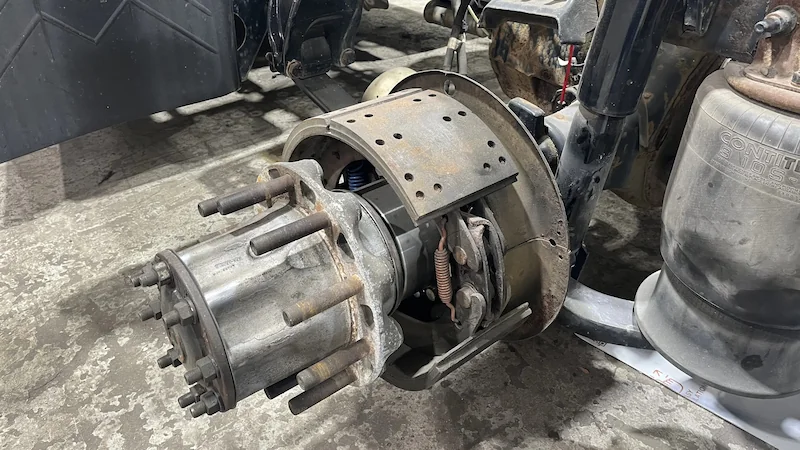
A full-floating axle is a driven axle design where the wheel hub turns on bearings mounted around a spindle at the end of the axle housing. The axle shaft transfers torque to the hub without supporting the vehicle’s weight. This arrangement is standard on conventional heavy truck drive axles.
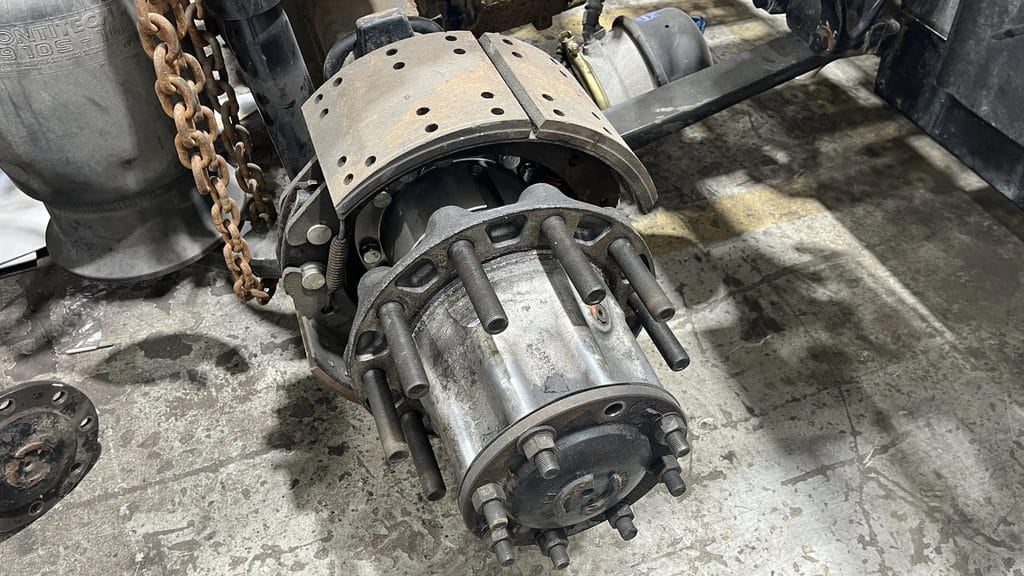
The spindle is the fixed support at the end of the axle housing. On a conventional full-floating rear axle, the hub rides on two tapered roller bearings, one inner and one outer. A spindle nut system keeps the hub and bearings in place.
The axle shaft passes through the centre of the housing. Its inner splines engage the differential, while its outer flange bolts to the hub.
When the truck carries a load, the force passes through the axle housing and spindle, then through the bearings into the hub and wheel. The shaft stays out of that load path and concentrates on transmitting torque.
That separation gives a full-floating rear axle several advantages. It can support much heavier loads, keeps the wheel mechanically supported if the shaft breaks and allows technicians to remove the shaft without taking off the hub.
There are trade-offs. A full-floater is generally heavier and more complex. Its wheel bearings, seals, lubrication and spindle nut system also require proper maintenance.

How to Identify a Full-Floating vs. Semi-Floating Axle
The easiest way to identify it is to look at the center of the drive wheel.
Check for a protruding hub. A conventional full-floating axle often has a hub extending through the wheel center, with a ring of bolts or nuts securing the axle shaft flange.
Look at the wheel mounting flange. On a typical semi-floating axle, the wheel attaches directly to the end of the axle shaft. Its center often looks flatter, although a wheel cover can hide the details.
Check the axle specifications. Hub appearance is a useful clue, but the manufacturer’s axle identification confirms the design. On a conventional highway tractor’s drive axle, the full-floating arrangement is standard. Identification matters more when comparing pickup truck axles.
Why Heavy Trucks Use Full-Floating Axles
A loaded Class 8 truck places enormous weight on its drive axles. Each axle may support several tonnes while transferring engine torque to the wheels. Making one shaft handle all those forces would create a major bending and strength challenge. With a full-floating design, the axle housing, spindle and hub bearings support the load. The shaft only needs to transmit torque.
This becomes especially important on trucks fitted with dual rear wheels. The tires and wheels extend outward from the axle housing, creating additional leverage on the wheel end. The two hub bearings, spaced apart along the spindle, support those forces.
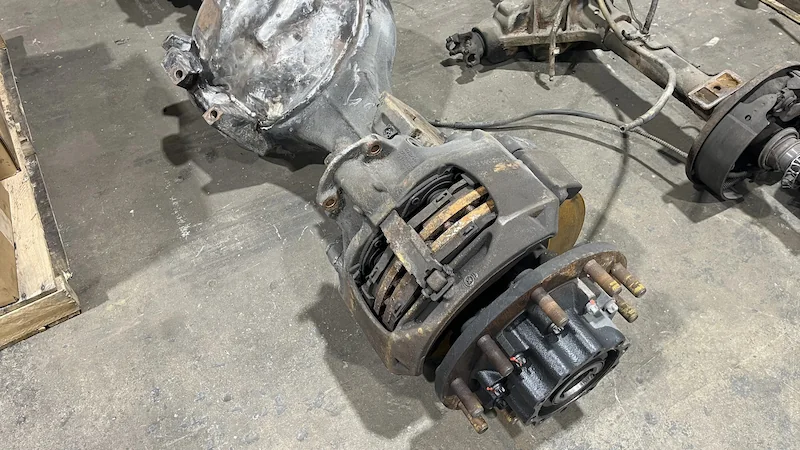
A full-floating design also improves serviceability. If an axle shaft fails, the hub remains mounted on its bearings. A technician can normally remove the shaft without dismantling the wheel end. However, a truck with a broken shaft should not be moved until the damage and safe recovery method have been assessed. You can also read about what’s inside a truck’s drive axle to understand different axle configurations, and explore for a closer look at its components.
One distinction matters here. Trailer axles and non-driven steer axles also use spindles, bearings and hubs. But they do not use conventional drive-axle shafts, so full-floating and semi-floating classifications do not apply to them.
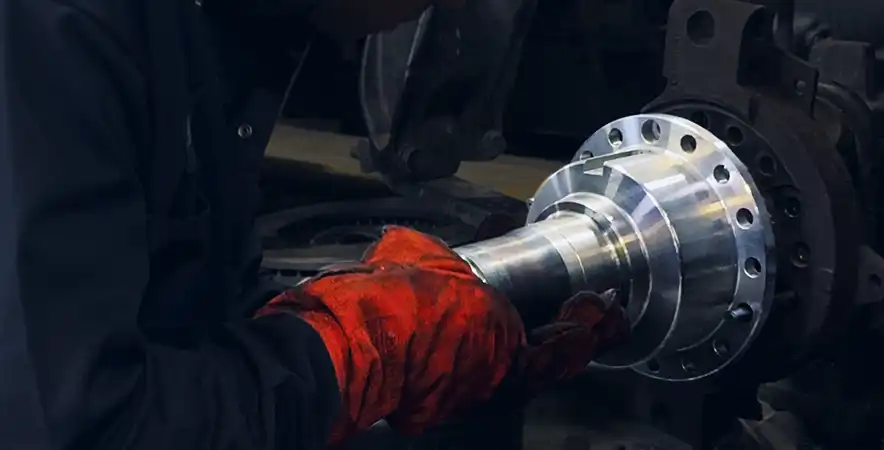
What Happens If a Full-Floating Axle Shaft Breaks?
On a full-floating axle, the wheel remains supported because the axle shaft does not hold the hub in place. The hub stays mounted on the spindle through its bearings and retaining nut system. However, the broken shaft can interrupt power delivery, and the differential may also need inspection.
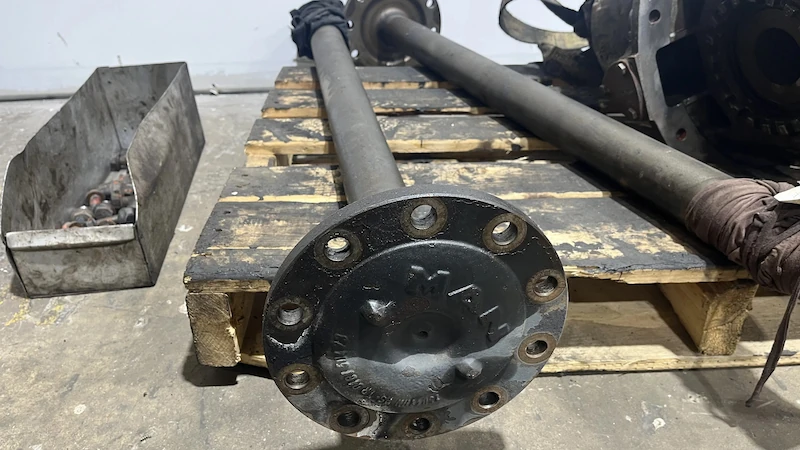
That does not mean the truck is safe to drive. The correct response depends on the axle design, differential configuration and extent of damage. Talk to us before attempting to move it.
What Wears Out on a Full-Floating Drive Axle?
The hub bearings transfer the load at each wheel end to the spindle and axle housing while allowing the hub to rotate. Bearing wear, lubricant loss or incorrect installation can damage the surrounding components, so a spindle inspection should also examine the bearings, seals and hub.
When we inspect a damaged drive-axle spindle, we check the bearing journals, seal surface and spindle threads for wear, scoring and signs of overheating. The condition of these surfaces, together with the bearings and lubricant, helps us identify how the damage developed.
Because the spindle and hub bearings carry the truck’s weight, the wheel end is a critical area for maintenance. When we inspect a damaged drive-axle spindle, we check the bearing journals, spindle threads and signs of overheating. Bearing condition and adjustment can tell us a great deal about how the damage developed.
The main inspection points include:
- Hub bearings: Worn or damaged bearings can cause excessive movement, roughness, noise and heat. For conventional adjustable bearings, technicians measure end play—the hub’s movement along the spindle, and check it against the applicable manufacturer’s specification. Preset and unitized hub assemblies require their own inspection and servicing procedures.
- Spindle journals, threads and retaining hardware: Bearing failure can damage the surfaces that support the bearings. Damaged threads, spindle nuts or locking components can also compromise hub retention. These parts need inspection alongside the bearings.
- Wheel seals and axle shaft flange seals: Lubricant on the inside of the wheel or around the axle shaft flange can indicate a leak. Inspection should identify its source and check for lubricant loss or contamination of the brake friction surfaces.
- Wheel-end lubrication: Insufficient or contaminated lubricant can damage the bearings. Technicians check its condition and follow the axle and hub manufacturers’ specifications for lubricant type, quantity and filling procedure, including any steps required to ensure lubricant reaches both wheel ends.
- Axle shaft splines and flange fasteners: The axle shaft transmits torque through its splines and its connection to the hub. Inspection should check for spline wear, loose or damaged flange fasteners, and damage to the mating surfaces.
A growling noise that changes during turns also deserves inspection, although it does not identify the failed component by itself. If you notice these signs, arrange a wheel-end inspection before the damage spreads.

Are Full-Floating Axles Stronger Than Semi-Floating Axles?
Full-floating axles are generally better suited for heavy loads because the axle housing, spindle and hub bearings support the vehicle’s weight instead of the axle shaft. However, this doesn’t automatically mean every full-floating axle is stronger than a semi-floating axle.
An axle’s strength also depends on several factors:
| Engineering Factor | Effect on Axle Performance |
|---|---|
| Axle shaft diameter | Influences torsional strength and stiffness |
| Shaft material and heat treatment | Affect yield strength, wear behavior, and fatigue resistance |
| Hub bearing capacity | Determines allowable wheel-end loading under specified conditions |
| Axle housing design | Influences bending resistance and structural support |
| Differential and gear design | Affects torque capacity and durability |
| Wheel-end geometry | Influences leverage, bearing loading, and bending moments |
| Lubrication and temperature | Affect bearing and drivetrain component life |
A well-engineered semi-floating axle can carry substantial loads within its specified ratings. A poorly maintained full-floating axle can fail under less demanding conditions. Vehicle manufacturers establish allowable axle loads through engineering validation rather than floating configuration alone.
Does a Full-Floating Axle Increase Towing Capacity?
A full-floating axle can support a vehicle designed for higher towing and payload demands, but installing one does not automatically increase the vehicle’s rated towing capacity.
Towing capacity depends on multiple systems, including the frame, brakes, suspension, tires, drivetrain, cooling system, and hitch.
Manufacturers specify limits such as:
GAWR (Gross Axle Weight Rating): The maximum allowable weight an individual axle system can support.
GVWR (Gross Vehicle Weight Rating): The maximum allowable loaded weight of the vehicle.
GCWR (Gross Combination Weight Rating): The maximum allowable combined weight of the tow vehicle and trailer, as specified by the manufacturer.
In Canada, commercial truck operators must also follow provincial vehicle weight regulations. For example, Ontario Regulation 413/05 sets weight limits based on axle configuration, axle ratings, and vehicle dimensions.
Even with a full-floating axle, your truck must stay within its manufacturer’s weight ratings and applicable legal weight limits.
How Do Semi-Floating Axles Reduce Weight and Cost?
Semi-floating axles typically eliminate the separate full-floating wheel hub and its associated bearing arrangement.
Their simpler construction can reduce material requirements, assembly complexity, and manufacturing expense.
Lower axle assembly weight may also reduce unsprung mass, depending on the complete suspension design.
Unsprung mass refers to the portions of a vehicle that move with the wheels rather than being supported by the suspension springs.
Reduced unsprung mass can improve the suspension’s ability to maintain tire contact over uneven surfaces.
However, overall ride quality depends on suspension geometry, spring rates, damping, tire construction, and other factors.
Do All Heavy-Duty Trucks Have Full-Floating Axles?
For most heavy-duty commercial trucks, full-floating axles are the preferred choice because they support heavy wheel loads without transferring that weight directly to the axle shafts. Their design also makes axle shaft removal easier and helps keep the wheels supported if a shaft breaks.
- Semi-floating axles remain a reliable option for lighter vehicles that don’t require the same heavy-duty wheel-end design.
- Regardless of the axle type, regular inspections and proper wheel-end maintenance are essential to prevent costly repairs and keep your truck on the road.
Full-Floating vs. Semi-Floating Axles for Towing and Hauling
The better axle design depends on the vehicle’s required wheel loads, operating conditions, and manufacturer ratings.
| Driving Application | Commonly Suitable Design | Main Reason |
|---|---|---|
| Daily passenger-car driving | Semi-floating | Compact construction and adequate rated capacity |
| Light-duty pickup use | Semi-floating | Lower complexity and weight |
| Heavy commercial hauling | Full-floating | Separate hub support for high axle loads |
| Heavy-duty towing applications | Full-floating | Robust wheel-end architecture |
| Heavy expedition vehicles | Full-floating | Structural separation of shaft torque and wheel loads |
| Moderate off-road driving | Either | Suitability depends on vehicle and axle ratings |
| Repeated high-load fleet operation | Full-floating | High-capacity wheel ends and serviceable construction |
Which Axle Design Is Best for Heavy-Duty Trucks?
The fundamental engineering difference between full-floating and semi-floating axles is how wheel loads enter the axle assembly. A full-floating axle places wheel-support duties on the hub bearings and housing. A semi-floating axle shaft transmits torque while also resisting wheel-related bending forces.
For heavy commercial trucks, full-floating axle design offers a practical balance of high-load wheel-end support, reduced axle-shaft bending, improved wheel retention after certain shaft failures, and easier drivetrain servicing.
Semi-floating axles remain appropriate for lighter applications because their simpler construction provides reliable performance within manufacturer-rated limits.
When comparing axles, prioritize the complete vehicle’s axle ratings, bearing capacity, shaft construction, intended operating conditions, and maintenance requirements. These engineering characteristics determine whether an axle can safely support the loads placed on it.
Protect Your Truck’s Drive Axle With Proper Wheel-End Maintenance
On a heavy truck, the spindle and hub bearings do the heavy lifting. The axle shaft turns the wheel, but those supporting components keep the load where it belongs.
If you notice oil around a drive wheel, excessive hub heat or an unusual wheel-end growl, get it inspected before it causes more damage.

Frequently Asked Questions
Dana 60 axles are available in both full-floating and semi-floating configurations. Dana 80 axles are commonly full-floating, including heavy-duty pickup applications. Check the specific axle assembly and hub design rather than relying only on the model name.
Conversion kits exist for certain pickup and off-road axles, but installation can require substantial modifications to the hubs, axle shafts and supporting components. Conventional heavy truck drive axles already use full-floating arrangements.
No. A conventional trailer axle has hubs, wheel bearings and spindles, but no driving axle shafts. The full-floating and semi-floating terms describe driven axle designs. Learn more about our trailer axle repair services.
A live axle is an axle that transmits power to the wheels. A dead axle supports vehicle weight without driving the wheels. Full-floating and semi-floating classifications describe how driven axle assemblies support the wheels. For more information, read our guide to the drive axle on a truck.
Floating describes the extent to which the axle shaft is relieved of wheel-support loads. A full-floating shaft primarily transmits torque, while a semi-floating shaft transmits torque and experiences bending loads from the wheel assembly.
A broken full-floating axle shaft may leave the wheel structurally supported, but driving is not necessarily possible or safe. Differential behavior, broken components, and internal damage determine whether the vehicle remains capable of moving.