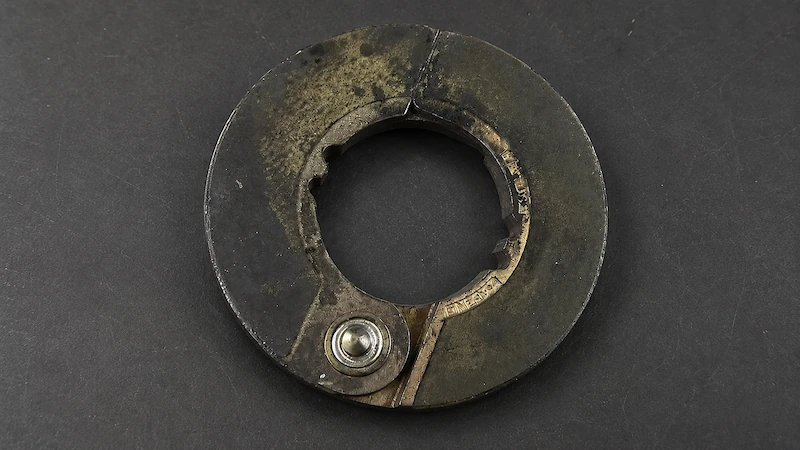
A clutch brake is a friction disc attached to the input shaft of the transmission. It keeps the input shaft from turning when you fully press the clutch pedal so you can engage first gear or reverse in a non-synchronized truck transmission from a complete stop without grinding gears.
New semi truck drivers sometimes get confused about what the clutch brake does. A clutch brake does not stop the truck. The service brakes slow the vehicle down. The clutch brake stops rotating transmission parts inside the driveline.
You can find clutch brakes on heavy trucks with non-synchronized manual transmissions, such as many Eaton Fullers and Roadrangers. Passenger cars don’t use them because their manual transmissions use synchronizers. Industrial machines also use “clutch-brake” units on presses and shop equipment. That’s a totally different thing, not the truck part covered here. Throughout this guide, we’ll completely explain what a clutch brake is, when to use it, and how not to burn it out.
Where is the clutch brake located?
The clutch brake sits inside the bellhousing area, right in front of the transmission. It is a circular friction disc splined to the input shaft. The release bearing sits on one side, and the front of the transmission sits on the other side.
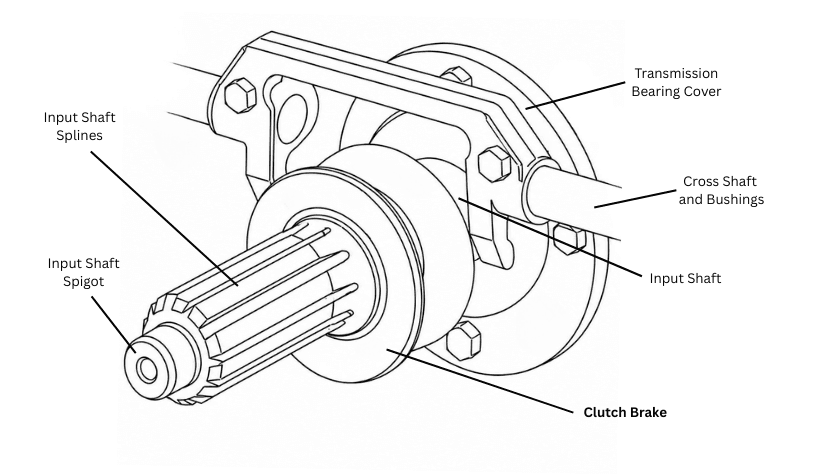
You usually cannot see it clearly without opening the clutch inspection area. A one-piece clutch brake wraps around the input shaft. A two-piece clutch brake splits into halves, so a mechanic can replace it without pulling the transmission in many cases.
How does a clutch brake work?
The clutch pedal does two jobs. The first part of pedal travel releases the clutch and disconnects the engine from the transmission. The last inch squeezes the clutch brake. The release bearing pushes the brake against the transmission face, and that friction stops the input shaft.
In fact, the clutch brake works only at the end of clutch pedal travel. In most heavy-duty trucks, it activates when you press the clutch pedal to the floor.
When the shaft stops spinning, the gears can line up without gear clash. That is why the clutch brake helps when you sit still and need first gear, low gear, or reverse.
New drivers should learn the pedal feel. Near the floor, the pedal often hits a firmer spot. That extra resistance is the clutch brake squeeze.
What vehicles use a clutch brake?
Heavy-duty trucks commonly use clutch brakes. Many tractors, vocational trucks, buses, and commercial vehicles with non-synchronized manual transmissions use them. As said earlier, passenger cars usually do not use clutch brakes, as they often use synchronizers to match gear speeds during shifts.
| Vehicle type | Clutch brake use | Reason |
|---|---|---|
| Heavy-duty road tractor | Common | Helps engage low gear from a stop |
| Dump truck | Common | Supports stop-and-go vocational use |
| Bus with manual transmission | Possible | Depends on transmission design |
| Passenger car | Uncommon | Synchronizers usually perform speed matching |
| Motorcycle | Uncommon | Uses a different clutch and gearbox design |
Types of clutch brakes
Clutch brakes have a few common designs, but they all basically do the same job. The real difference is in how they handle driver abuse, how much protection they give the drivetrain, and how easy they are to replace.
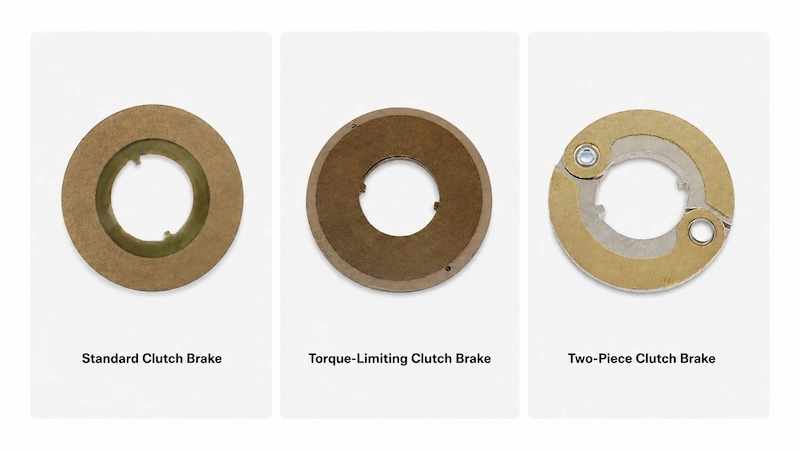
Standard clutch brake
A standard clutch brake uses a steel washer splined to the input shaft, with friction material on each side. It is simple and common, but repeated hard use will wear it out fast.
Torque-limiting clutch brake
A torque-limiting clutch brake can slip when a driver applies too much force. Many torque-limiting clutch brakes use Belleville-washer springs inside them. Those springs let the brake slip at about 12 ft-lb, or 16 Nm, so the clutch brake is not damaged by a driver pushing the pedal too hard.
Two-piece clutch brake
A two-piece clutch brake splits into two sections. A mechanic can install it around the input shaft instead of sliding it over the end of the shaft. That can save labor because the transmission may not need to come out.
Is a clutch brake the same as a clutch?
A clutch brake is not the same as a clutch. The names sound similar because both parts operate through the clutch pedal system, but their functions differ.
The clutch transfers engine torque to the transmission. The clutch brake stops the transmission input shaft when the vehicle is stationary.
What is the difference between a clutch brake and a transmission brake?
A clutch brake is a type of transmission input shaft brake. It acts through the clutch release system and helps gear engagement from a stop.
The phrase “transmission brake” can mean different things in different systems. In heavy-duty manual clutch systems, people often use the term to describe the clutch brake. In other driveline contexts, it may refer to a parking or driveline brake.
When should you use a clutch brake?
Use the clutch brake only when the truck has fully stopped and you need first, low, or reverse. Full stop means no rolling movement at all.
Experienced drivers often use the clutch brake once when they pull away, then barely touch it again. Many float the gears after the truck starts moving. Others use a partial clutch movement. Both habits avoid the final inch unless the truck has stopped.
Do not push the clutch pedal to the floor while moving. That habit ruins clutch brakes. If the truck rolls and you floor the pedal, the brake tries to stop parts that still have road-speed rotation coming from the drive axles. It overheats and tears up the friction material fast.
How to use the clutch brake correctly
Use this order:
- Come to a full stop.
- Press the clutch pedal partway to release the clutch, then push it firmly to the floor.
- Hold it there for about 2 to 3 seconds, just long enough for the shaft to stop.
- Select first, low, or reverse gear.
- Ease off the clutch and pull away.
Do not sit with the pedal mashed to the floor. A short press helps the gear engage. Holding it there at every stop only adds wear.
Why does a truck grind when going into gear?
A truck may grind when going into gear because the transmission input shaft is still spinning. A worn clutch brake, poor clutch adjustment, or clutch drag can prevent the shaft from stopping.
Common causes include:
- Clutch brake wear when grinding happens only from a stop.
- Clutch drag when the clutch does not fully release.
- Linkage error when pedal travel feels abnormal.
- Pilot bearing drag when the input shaft keeps spinning.
- Driver misuse when the pedal reaches the floor during rolling shifts.
How long does a clutch brake last?
A clutch brake can last a long time when the driver uses it only at a stop. Its life drops quickly when the clutch pedal is pushed fully down during moving shifts.
No single mileage number applies to every truck. Vehicle weight, clutch adjustment, duty cycle, driver behavior, and transmission type affect wear.
A driver stops a loaded truck at a traffic light. The transmission sits in neutral. The driver presses the clutch pedal fully down, waits briefly, and selects first gear. The clutch brake stops the input shaft, and the gear engages smoothly.
A poor-use example is different. A driver shifts while rolling and pushes the clutch pedal to the floor. The clutch brake contacts a fast-spinning input shaft. Heat and friction increase. The brake wears faster.
Can you drive with a bad clutch brake?
You can sometimes drive with a bad clutch brake, but the problem can damage gears and make starting-gear engagement difficult. A failed clutch brake increases gear clash when selecting first or reverse from a stop.
A bad clutch brake does not usually prevent the vehicle from moving. It mainly affects stationary gear selection. Continued grinding can damage transmission gear teeth and shift collars.
What are the signs of a bad clutch brake?
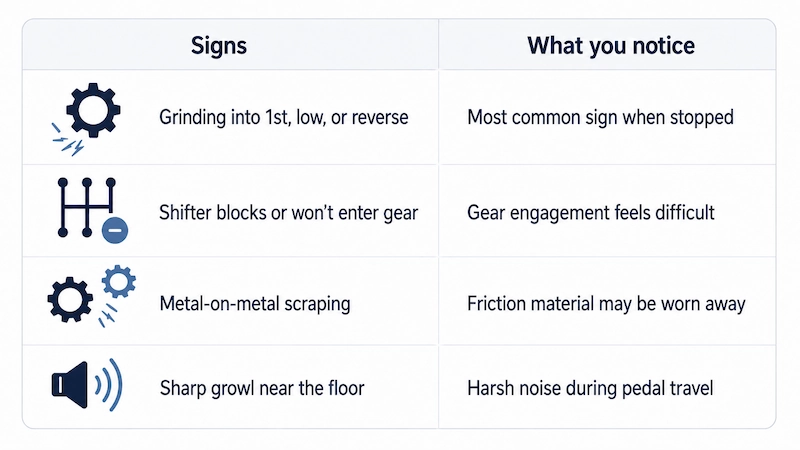
A bad clutch brake usually shows up when the truck sits still. The most common sign is grinding when you try to get into first, low, or reverse. Reverse often complains first because drivers select it from a stop.
You may also feel the shifter block or refuse to enter gear. When the friction material wears away, the noise can change to harsh metal-on-metal scraping or a sharp growl near the floor.
We’ve seen drivers blame the transmission when the real problem was a burned clutch brake. One truck came in after a week of floor-pedal rolling shifts. The disc had lost most of its friction material. The part was small, but downtime and shop labor still made the repair hurt.
What ruins a clutch brake
The number one killer is pressing the clutch pedal to the floor while the truck is moving. That forces the clutch brake to act against a spinning shaft. It was not built for that job.
Riding the pedal also causes trouble. Some drivers rest a foot on the clutch and keep light pressure on the system. Poor clutch adjustment makes things worse. Too little free play keeps parts too close. Too much free play can stop the brake from squeezing.
| Cause | What happens | Result |
|---|---|---|
| Pedal pressed to floor while moving | Brake contacts a spinning shaft | Rapid wear |
| Incorrect clutch adjustment | Brake engages too early or too late | Grinding or drag |
| Worn release bearing | Contact becomes uneven | Noise and poor braking |
| Contamination | Oil or grease reaches friction surfaces | Reduced braking force |
| Broken brake body | Brake loses contact stability | Harsh noise or no braking |
Dry parts, worn linkage, and a release bearing that does not move smoothly can also make the clutch brake feel weak or rough.
How do you check a clutch brake?
You check a clutch brake by testing gear engagement while the vehicle is safely stopped. A working clutch brake should let you engage first or reverse with minimal gear clash after the pedal reaches the floor.
A basic driver-level check includes:
- Park the vehicle on level ground.
- Apply the parking brake.
- Start the engine.
- Depress the clutch pedal fully to the floorboard.
- Hold the pedal down and pause for 2 to 3 seconds.
- Select first gear or reverse.
- Listen for grinding or harsh engagement
A repair-level inspection requires checking linkage adjustment, clutch brake squeeze, release bearing clearance, and physical brake condition. Service specifications vary by vehicle and clutch system.
Clutch brake adjustment and free play
Clutch brake adjustment controls how well the brake squeezes at the end of pedal travel. Many heavy-truck clutch checks use a 0.010 inch, or 0.25 mm, feeler gauge to confirm clutch brake squeeze. A common in-cab check looks for the brake to release about 1/2 to 1 inch from the floor, or about 12 to 25 mm.
If the pedal reaches the floor but the brake does not squeeze, the truck may grind into first or reverse. If the brake squeezes too early, the clutch may drag or wear parts faster.
Owner-operators can check pedal feel and watch for grinding. A shop should handle deeper adjustment on Eaton Fuller style pull-type clutches.
Replacing a clutch brake
Replacement depends on the clutch brake type. A standard one-piece brake can mean more labor because it sits around the input shaft. In some repairs, the transmission has to come out.
A two-piece clutch brake can often be changed with less effort. For stubborn one-piece units, shops may use a Kiene K-1360 clutch brake cutter instead of torching or fighting the part by hand.
Do not judge the repair by the size of the disc. The part looks simple, but access makes the job.

Frequently Asked Questions
A clutch brake is a small friction brake that stops the transmission input shaft. It helps a heavy-duty manual transmission shift into first gear or reverse when the vehicle is stopped.
Trucks need clutch brakes because many heavy-duty manual transmissions lack full synchronization. The clutch brake stops shaft rotation and helps the driver engage a starting gear from a standstill.
You should press the clutch pedal to the floor only when stopped and selecting a starting gear. During rolling shifts in many heavy-duty manuals, full pedal travel can activate the clutch brake and cause wear.
A worn clutch brake fails to stop the input shaft. The driver may hear grinding when selecting first gear or reverse from a stop
Clutch brake repair cost depends on vehicle design, labor access, clutch condition, and whether the transmission must be removed. A split clutch brake can reduce labor in some heavy-duty applications.